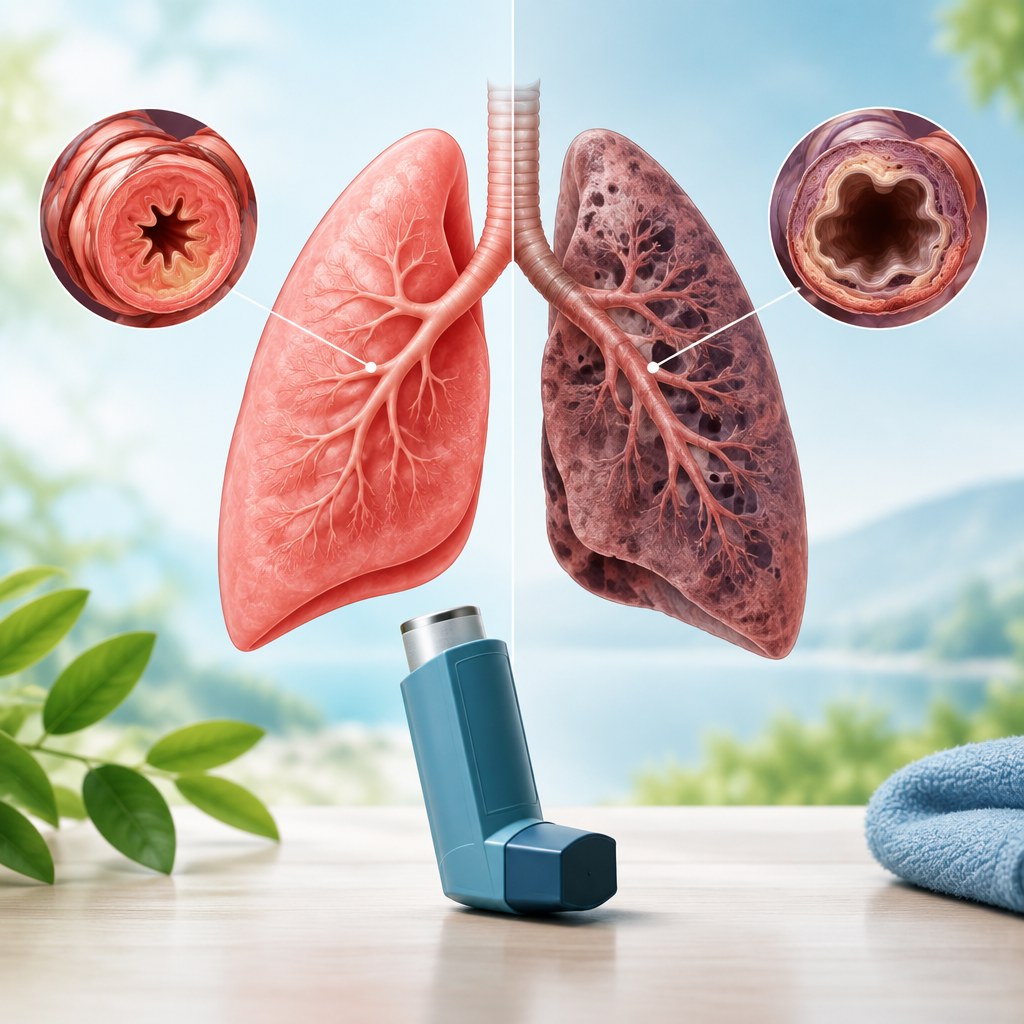
Asthma and chronic obstructive pulmonary disease (COPD) are common long-term lung conditions. Both can cause breathlessness, coughing and wheezing, but their causes, patterns and treatment are not identical.
Asthma
Asthma involves inflammation and narrowing of the airways. Symptoms can vary over time and may be triggered by exercise, allergens, respiratory infections, smoke, cold air or other irritants.
COPD
COPD causes persistent airflow limitation and includes emphysema and chronic bronchitis. Tobacco smoke is an important risk factor, although occupational and environmental exposures can also contribute.
Why the distinction matters
Inhaled medicines are important in both conditions, but treatment differs. Correct inhaler technique is essential. If you use an inhaler, ask a healthcare professional to periodically check how you use it.
Reducing risk
Avoiding tobacco smoke is one of the most important measures for lung health. Vaccination, appropriate physical activity and pulmonary rehabilitation where indicated may also form part of care.
When to seek urgent help
Severe or rapidly worsening breathlessness, difficulty speaking because of breathlessness, confusion, blue or grey lips or skin, or poor response to prescribed rescue treatment requires urgent medical attention.
This is general information and does not replace individual diagnosis or treatment.
Ask for an action plan
An individual action plan explains everyday treatment, signs of worsening symptoms and what to do next. Ask the team to watch you use each inhaler: devices have different techniques. Check how to tell when a device is empty and whether a spacer is appropriate. Keep prescribed treatment available when travelling or away from home.
Review the diagnosis and the environment
Breathing tests can help distinguish causes of persistent symptoms. Tell the clinician about tobacco smoke, dust, fumes, workplace exposures and indoor cooking smoke. If symptoms continue despite treatment, the next step may be reviewing technique, adherence, triggers or the diagnosis, rather than simply using more reliever medicine.
Practical checklist
- Bring every inhaler to the appointment.
- Demonstrate your usual technique and ask for corrections.
- Request a written worsening-symptom plan.
- Discuss smoking cessation, vaccination and rehabilitation if appropriate.
- Check medicine access before supplies run out.
Common question
Can breathing exercises replace inhaled medicines?
No. They may support some people, but should not replace prescribed treatment or delay emergency help for severe breathlessness.
Sources and further reading
Related support
Use our appointment preparation guide, resources and community support to plan your next step.
Sources checked 22 September 2026. General education, not individual medical advice. International service arrangements may differ from South Africa. Featured artwork is illustrative, not a patient testimonial.
Leave a Reply