Category: Respiratory & Lung Health

  • Asthma and COPD: Understanding the Difference, Symptoms and Treatment

    Asthma and COPD: Understanding the Difference, Symptoms and Treatment

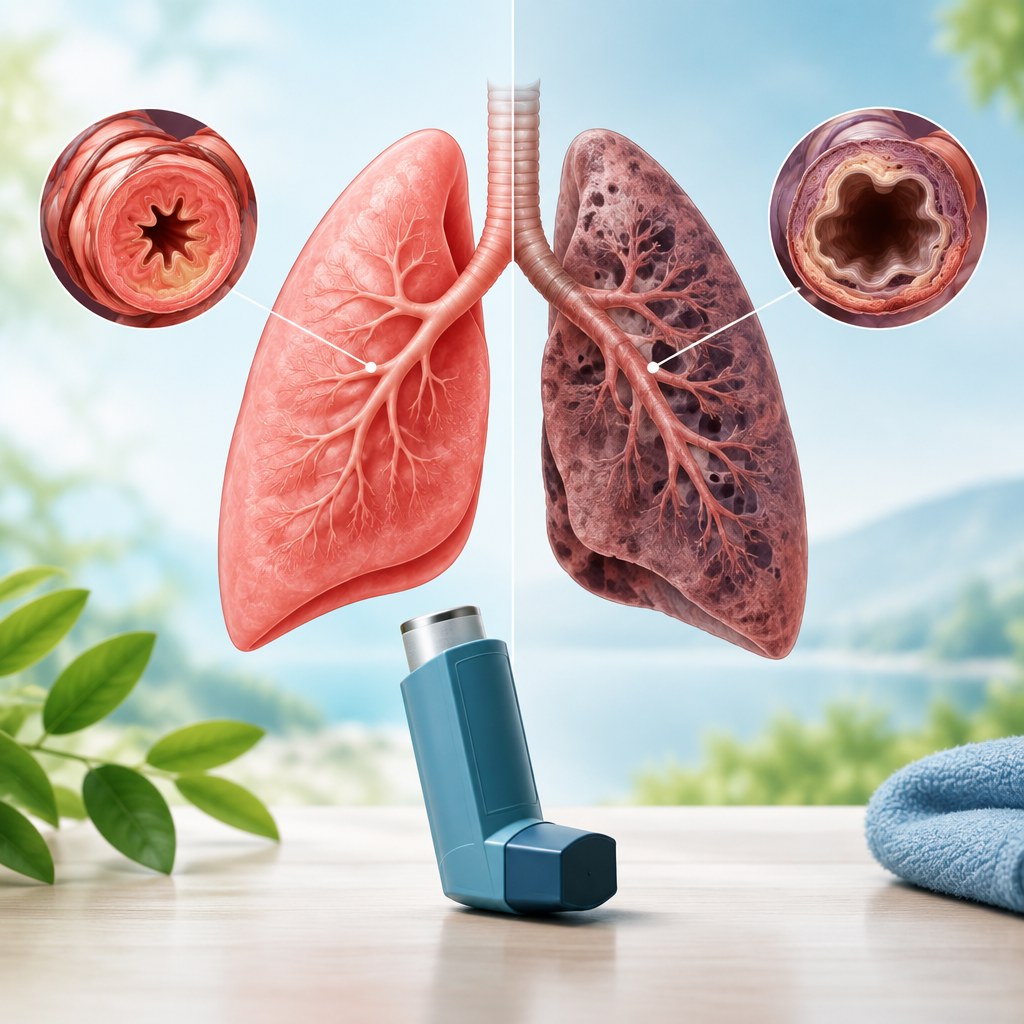
    Asthma and chronic obstructive pulmonary disease (COPD) are common long-term lung conditions. Both can cause breathlessness, coughing and wheezing, but their causes, patterns and treatment are not identical.

    Asthma

    Asthma involves inflammation and narrowing of the airways. Symptoms can vary over time and may be triggered by exercise, allergens, respiratory infections, smoke, cold air or other irritants.

    COPD

    COPD causes persistent airflow limitation and includes emphysema and chronic bronchitis. Tobacco smoke is an important risk factor, although occupational and environmental exposures can also contribute.

    Why the distinction matters

    Inhaled medicines are important in both conditions, but treatment differs. Correct inhaler technique is essential. If you use an inhaler, ask a healthcare professional to periodically check how you use it.

    Reducing risk

    Avoiding tobacco smoke is one of the most important measures for lung health. Vaccination, appropriate physical activity and pulmonary rehabilitation where indicated may also form part of care.

    When to seek urgent help

    Severe or rapidly worsening breathlessness, difficulty speaking because of breathlessness, confusion, blue or grey lips or skin, or poor response to prescribed rescue treatment requires urgent medical attention.

    This is general information and does not replace individual diagnosis or treatment.

    Ask for an action plan

    An individual action plan explains everyday treatment, signs of worsening symptoms and what to do next. Ask the team to watch you use each inhaler: devices have different techniques. Check how to tell when a device is empty and whether a spacer is appropriate. Keep prescribed treatment available when travelling or away from home.

    Review the diagnosis and the environment

    Breathing tests can help distinguish causes of persistent symptoms. Tell the clinician about tobacco smoke, dust, fumes, workplace exposures and indoor cooking smoke. If symptoms continue despite treatment, the next step may be reviewing technique, adherence, triggers or the diagnosis, rather than simply using more reliever medicine.

    Practical checklist

    1. Bring every inhaler to the appointment.
    2. Demonstrate your usual technique and ask for corrections.
    3. Request a written worsening-symptom plan.
    4. Discuss smoking cessation, vaccination and rehabilitation if appropriate.
    5. Check medicine access before supplies run out.

    Common question

    Can breathing exercises replace inhaled medicines?

    No. They may support some people, but should not replace prescribed treatment or delay emergency help for severe breathlessness.

    Sources and further reading

    Related support

    Use our appointment preparation guide, resources and community support to plan your next step.

    Sources checked 22 September 2026. General education, not individual medical advice. International service arrangements may differ from South Africa. Featured artwork is illustrative, not a patient testimonial.

  • HIV and Tuberculosis: Testing, Treatment and Why Stigma Still Causes Harm

    HIV and Tuberculosis: Testing, Treatment and Why Stigma Still Causes Harm

    HIV and tuberculosis are different infections, but they are closely connected in public health. Early diagnosis and consistent treatment can make a major difference.

    HIV

    HIV affects the immune system. Modern antiretroviral treatment can suppress the virus and allow people with HIV to live long, healthy lives. Testing is the only way to know HIV status.

    Tuberculosis

    Tuberculosis most commonly affects the lungs but can affect other parts of the body. Symptoms can include persistent cough, fever, night sweats and unexplained weight loss. People with symptoms or known exposure should seek assessment.

    Why the conditions overlap

    HIV can weaken immune defences and increase the risk of developing active tuberculosis. This is why services for the two infections often work closely together.

    Treatment adherence matters

    Both conditions require appropriate medication. Stopping treatment without medical advice can lead to illness and can complicate future treatment.

    Stigma causes harm

    These are medical conditions, not moral judgments. Fear of discrimination can delay testing and treatment. Respectful, confidential healthcare and accurate information are essential.

    Anyone concerned about possible exposure or symptoms should contact an appropriate healthcare service for testing and advice.

    Testing is the next step, not a judgment

    HIV testing and TB assessment answer different questions. A negative HIV test soon after exposure may need follow-up because tests have a window period. TB evaluation may include sputum testing, imaging and other investigations selected for the symptoms. Tell the service about current medicines because TB and HIV treatments can interact.

    Recent possible HIV exposure

    Seek urgent assessment for post-exposure prophylaxis (PEP). WHO recommends starting as soon as possible, ideally within 24 hours and no later than 72 hours. Do not wait for symptoms or a routine appointment. If more time has passed, testing and prevention advice still matter.

    Practical appointment checklist

    1. Ask which tests you need and when results will be available.
    2. Arrange a follow-up contact rather than assuming silence means a normal result.
    3. Discuss barriers such as transport, food, side effects or privacy.
    4. Ask how to reduce TB transmission while awaiting advice.
    5. Keep treatment and monitoring appointments, even when you feel better.

    Common question

    Can nutrition replace HIV or TB medicines?

    No. Adequate nutrition supports health, but keto, carnivore, supplements and detox products do not replace antiretroviral or TB treatment.

    Sources and further reading

    Related support

    Use our appointment preparation guide, resources and community support to plan your next step.

    Sources checked 22 September 2026. General education, not individual medical advice. International service arrangements may differ from South Africa. Featured artwork is illustrative, not a patient testimonial.

  • Sleep Disorders: Insomnia, Sleep Apnoea and When Poor Sleep Needs Medical Attention

    Sleep Disorders: Insomnia, Sleep Apnoea and When Poor Sleep Needs Medical Attention

    Occasional poor sleep is common, but persistent sleep problems can affect concentration, mood, safety and physical health. Different sleep disorders require different approaches.

    Insomnia

    Insomnia involves difficulty falling asleep, staying asleep or obtaining restorative sleep despite adequate opportunity. Stress, mental-health conditions, pain, medicines and other health problems can contribute.

    Sleep apnoea

    Obstructive sleep apnoea causes repeated interruptions to breathing during sleep. Loud snoring, witnessed pauses in breathing, waking gasping, morning headaches and significant daytime sleepiness can be clues.

    Why assessment matters

    Persistent daytime sleepiness can increase accident risk, while untreated sleep apnoea is associated with cardiovascular and metabolic problems. A sleep study may be recommended when apnoea is suspected.

    Improving sleep

    Regular sleep timing, limiting late caffeine, addressing alcohol use and creating a suitable sleep environment can help some people. Chronic insomnia may benefit from structured psychological treatment such as cognitive behavioural therapy for insomnia.

    Do not drive when dangerously sleepy

    Severe sleepiness can impair driving and other safety-sensitive activities. Seek assessment rather than trying to push through it.

    Persistent or severe sleep problems deserve appropriate medical evaluation.

    Treat the type of sleep problem

    For chronic insomnia, cognitive behavioural therapy for insomnia (CBT-I) is commonly the first treatment approach. It is more structured than a list of sleep-hygiene tips. Suspected sleep apnoea may require a sleep study; treatment can include a positive-airway-pressure device such as CPAP, with alternatives selected for the individual. A sleeping tablet does not resolve an obstructed airway.

    Use a simple sleep diary

    Record bedtime, estimated sleep, waking time, naps, caffeine, alcohol and daytime sleepiness. A partner’s observations of pauses in breathing can be useful. Consumer sleep trackers can describe patterns but cannot reliably diagnose or exclude a sleep disorder.

    Practical appointment checklist

    1. Keep a short diary to bring to the appointment.
    2. Review medicines, pain and mental-health concerns with the clinician.
    3. Ask about CBT-I if insomnia is persistent.
    4. Discuss a sleep study if apnoea symptoms are present.
    5. Avoid driving or hazardous work when dangerously sleepy.

    Common question

    Should I stop CPAP after losing weight?

    Do not stop it without reassessment. Symptoms and the need for treatment should be reviewed by your sleep-care team.

    Sources and further reading

    Related support

    Use our appointment preparation guide, resources and community support to plan your next step.

    Sources checked 22 September 2026. General education, not individual medical advice. International service arrangements may differ from South Africa. Featured artwork is illustrative, not a patient testimonial.

  • Breathlessness: Common Causes, Warning Signs and When to Seek Medical Help

    Breathlessness: Common Causes, Warning Signs and When to Seek Medical Help

    Breathlessness can range from feeling slightly winded to feeling as though you cannot get enough air. It may occur with exertion, at rest, suddenly or gradually. Because the lungs, heart, blood and nervous system all contribute to breathing, there are many possible causes.

    Common causes

    Respiratory causes include asthma, respiratory infections, chronic obstructive pulmonary disease and other lung conditions. Breathlessness can also occur with heart disease, anaemia, blood clots, anxiety or panic, deconditioning and a range of less common conditions. More than one factor may be present at the same time.

    When breathlessness is an emergency

    Seek urgent medical care for severe or rapidly worsening difficulty breathing, blue or grey lips or skin, confusion, fainting, significant chest pain, coughing up blood, or breathlessness accompanied by signs of a serious allergic reaction. Sudden unexplained breathlessness also deserves urgent assessment, particularly when accompanied by chest pain, a very fast heartbeat or one-sided leg swelling.

    What a clinician may ask

    Useful details include when the problem began, whether it is getting worse, what triggers it, whether you wheeze or cough, whether you have fever or chest discomfort, and whether you become breathless when lying flat. Tell the clinician about smoking or vaping, recent infections, travel or immobility, medications and existing heart or lung conditions.

    Possible investigations

    Depending on the situation, assessment may include oxygen saturation, examination of the heart and lungs, blood tests, an ECG, chest imaging or lung-function testing. Not everyone needs every test; the pattern of symptoms and examination findings guides the investigation.

    Living with chronic breathlessness

    If breathlessness is caused by a long-term condition, treatment should address the underlying cause. Pulmonary rehabilitation, appropriate physical activity, breathing techniques and correct inhaler use can be important for some people. Ask for your inhaler technique to be checked periodically if you use one.

    Do not assume it is anxiety

    Anxiety can cause genuine breathlessness and can amplify symptoms from other conditions, but new or unexplained breathing difficulty should not automatically be attributed to anxiety. A medical assessment can help determine what is happening.

    This article is general information. Severe or sudden breathing difficulty requires urgent medical attention.

    What to do while arranging help

    If breathing is severe, suddenly worsening, or accompanied by collapse, chest pain or confusion, call emergency services now. In South Africa, call 112 from a cellphone or 10177 for an ambulance. Follow the dispatcher’s instructions and avoid driving yourself. Sit in a position that makes breathing easier and use your own prescribed rescue treatment according to your action plan. Do not borrow medicines or assume that breathing exercises will treat an unknown cause.

    A useful symptom record

    1. Write down whether symptoms began suddenly or gradually.
    2. Describe what you could do before and what you can do now, such as walking to the bathroom.
    3. Note fever, cough, wheeze, chest pain, ankle swelling or difficulty lying flat.
    4. List recent surgery, prolonged travel, infections and medicine changes.
    5. Bring inhalers and ask someone to check technique.

    A home oxygen reading cannot explain the cause or reliably rule out a serious problem. Seek help for worrying symptoms even when a device gives a reassuring number.

    Sources and further reading

    Related support

    Explore our practical resources and community support. For nutrition questions, browse Keto & Metabolic Health.

    Sources checked 22 September 2026. General education; individual care should be discussed with a qualified healthcare professional.

  • Cystic Fibrosis: Understanding the Condition, Daily Care and Support

    Cystic Fibrosis: Understanding the Condition, Daily Care and Support

    Cystic fibrosis, or CF, affects daily routines as well as health. Appointments, respiratory care, nutrition and ordinary family responsibilities can compete for time. Understanding the condition is a first step toward a care plan that is both medically appropriate and manageable.

    A genetic condition affecting more than the lungs

    CF is caused by changes in the CFTR gene that affect how a protein works. This can make mucus thick and sticky, causing problems in the airways and other organs. It is a genetic condition, not an autoimmune disease or a primary antibody deficiency.

    Symptoms and severity vary. CF can affect breathing and digestion, and some people need support with nutrition and growth. It occurs in children and adults. The NHLBI introduction to cystic fibrosis explains the condition.

    How is CF diagnosed?

    Assessment may involve sweat chloride testing, genetic testing and clinical findings. A positive newborn screening result requires further evaluation; screening and diagnosis are not the same thing. Some people are diagnosed later in life.

    If CF is suspected, ask for advice from a clinician familiar with the condition. The NHLBI diagnosis guide explains the different tests. Do not use a single symptom, ancestry or a consumer genetic result to rule CF in or out.

    What might a treatment plan include?

    Specialist care can include airway-clearance techniques, medicines for airway mucus or infections, and nutritional treatment. People with pancreatic insufficiency may need prescribed digestive enzymes. CFTR modulator medicines can help certain people, depending on their gene variants and other eligibility factors.

    There is no single identical regimen for everyone. Ask the CF team which treatments apply to you, what each does and how access works locally. New treatment options do not mean other prescribed therapies should be stopped without advice.

    Read NHLBI’s CF treatment guide and the Cystic Fibrosis Foundation’s overview. These explain established care while recognising individual differences.

    Infection prevention needs specific advice

    People with CF can pass certain harmful germs to one another. Follow your CF team’s advice about contact with other people who have CF, healthcare visits and cleaning respiratory equipment. Do not share treatment devices. Online peer support can offer connection without bringing people together physically.

    The NHLBI guide to living with CF covers ongoing care and precautions. Ask for written instructions for your own equipment rather than using a generic cleaning routine.

    Know when to contact the team

    Ask what changes in cough, mucus, breathing, appetite or energy should trigger a call. New or worsening symptoms may need treatment adjustments or investigation. Follow the plan given by your CF service; do not wait for the next scheduled review when symptoms are worsening.

    Severe breathing difficulty, collapse or coughing up a large amount of blood needs emergency help. An online article cannot assess the severity of an individual episode.

    Build a routine that can survive difficult days

    Take a realistic account of your day to an appointment. Discuss:

    • Which treatments take the most time and which steps are difficult to complete.
    • Where equipment can be stored and maintained safely.
    • How school, work, transport and electricity access affect the routine.
    • What to do if supplies run low or an appointment cannot be attended.
    • Who can help with non-medical tasks while you manage treatment.

    Ask the team to prioritise and problem-solve with you. Being honest about barriers is more useful than leaving with a plan that cannot be carried out.

    Support in South Africa

    The South African Cystic Fibrosis Association (SACFA) provides information, advocacy and routes to local support and clinic information. Confirm services and treatment access with the relevant clinic.

    Our appointment preparation guide and shared caregiving plan can help families organise practical questions and responsibilities.

    General health information, not an individual diagnosis or treatment plan. Sources checked on 16 September 2026. International sources may describe services or medicines that differ from those available in South Africa. The featured image is illustrative.