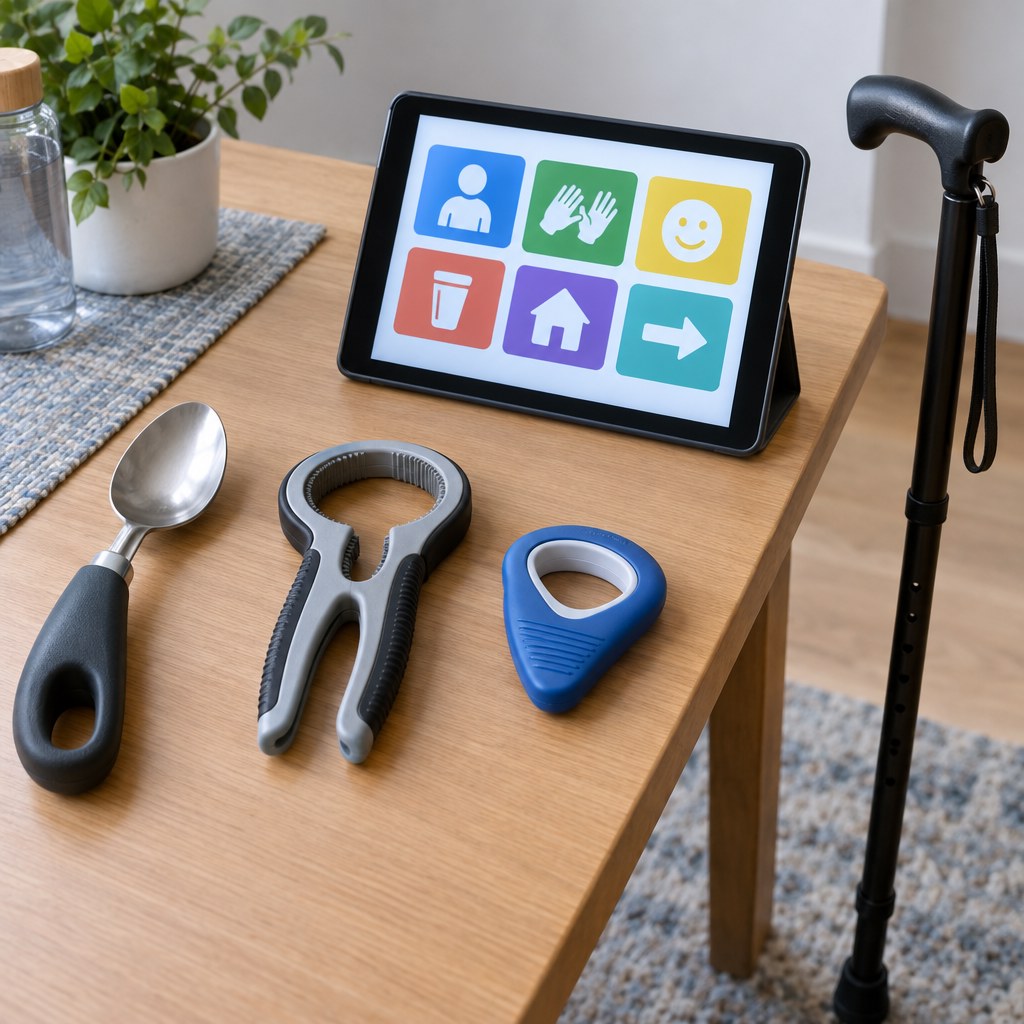
Rehabilitation aims to improve functioning and help people participate in everyday life. Assistive technology can be part of that process, ranging from simple walking aids to communication devices and adapted home equipment.
More than wheelchairs
Assistive products can include walking sticks, walkers, wheelchairs, hearing devices, visual aids, communication technology, grab rails and adapted utensils.
Fit matters
An unsuitable device can be uncomfortable or unsafe. Assessment by an appropriate rehabilitation professional can help match equipment to the person’s body, environment, abilities and goals.
Rehabilitation after illness or injury
Physiotherapy, occupational therapy, speech-and-language therapy and other services may be involved after stroke, serious injury, surgery, neurological illness or prolonged hospitalisation.
The goal is participation
Success is not only about physical recovery. Being able to communicate, prepare food, move safely or participate in family and community life can be equally important goals.
Caregivers need training too
Where caregivers help with transfers, mobility or equipment, proper instruction can reduce injuries for both people.
Equipment and rehabilitation plans should be tailored to individual needs.
Start with the task, then choose the tool
“I want to get to the toilet safely at night” or “I want to feed myself with less pain” provides a useful starting point. An occupational therapist, physiotherapist or other relevant professional can assess the person, the task and the environment. A device that works in a clinic may need adapting for steps, narrow doors, uneven paths or transport at home.
Try, train and review
Ask for a demonstration and a chance to practise. Check maintenance, replacement parts, charging needs and total costs. A walking aid set to the wrong height or an unsuitable transfer method can cause problems. Caregivers need training rather than relying on a video of someone with different needs.
Practical checklist
- Name one activity you want to do more independently.
- Describe the space, surfaces and transport involved.
- Ask whether the equipment can be tried before purchase.
- Learn safe use, cleaning and maintenance.
- Review fit and function if health or circumstances change.
Common question
Does using an aid mean giving up on recovery?
No. Appropriate equipment can support independence and participation while rehabilitation continues.
Sources and further reading
Related support
Use our appointment preparation guide, resources and community support to plan your next step.
Sources checked 22 September 2026. General education, not individual medical advice. International service arrangements may differ from South Africa. Featured artwork is illustrative, not a patient testimonial.
Leave a Reply