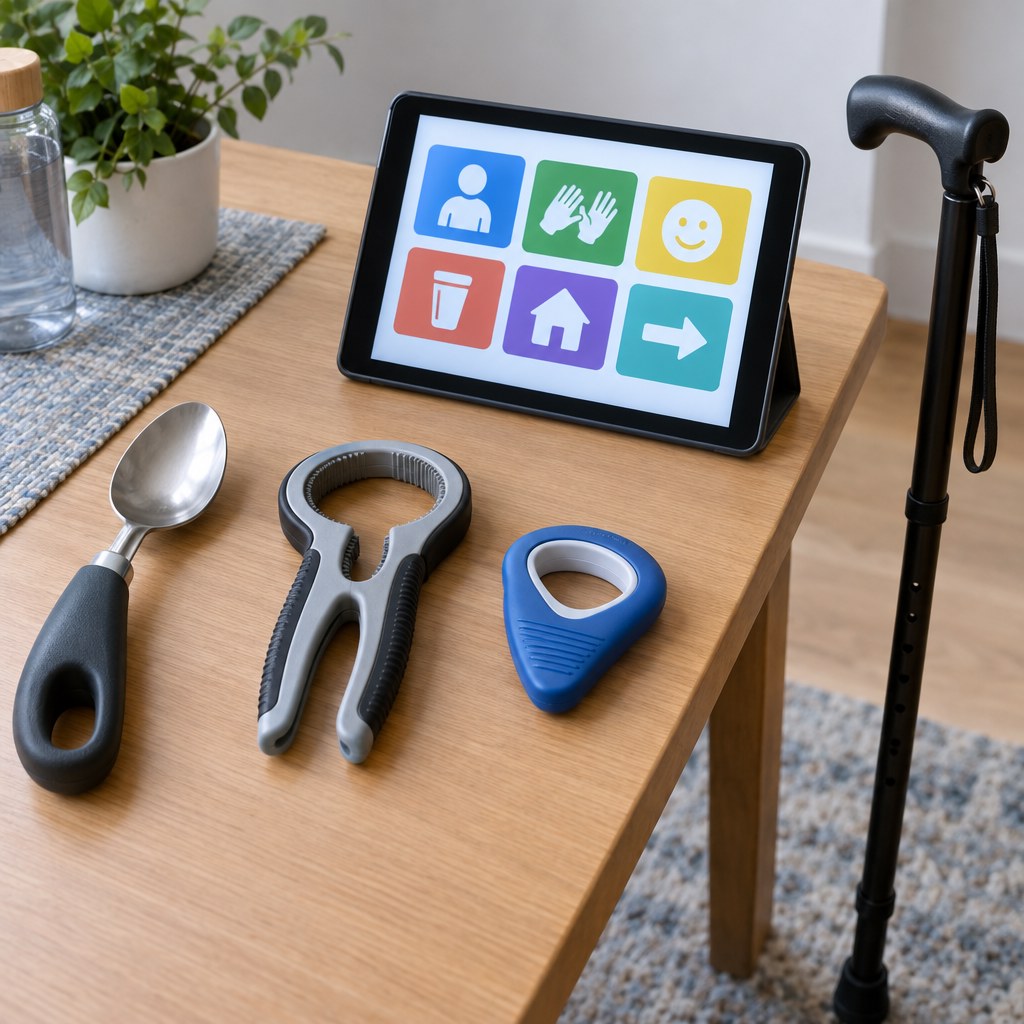
Supporting independence at home means matching the space, daily routines and support around you to the way you move now—not forcing you to work around barriers. Small, well-chosen changes can make transfers, bathing, cooking, rest and leaving the house safer and less tiring while preserving privacy, control and confidence.

Start with the real barriers, not the product list
Mobility needs can change after an injury, surgery, stroke, neurological condition, chronic pain flare, ageing-related changes or periods of fatigue. They may also vary across the day. A home that feels manageable in the morning can become difficult when pain, weakness, dizziness or exhaustion increases.
Before buying equipment or planning alterations, identify the moments where you lose time, feel unsafe or need more help than you want. Look at the complete journey: getting out of bed, reaching the toilet, preparing food, answering the door, managing laundry, taking medication and getting outside.
Notice the interaction between person, task and environment
A threshold is not automatically a problem; it becomes one if it catches a foot, blocks a wheelchair or makes you fear a fall. Similarly, a shower may be accessible for one person but unsafe for someone who cannot stand for long or who struggles with balance. The best solution considers your abilities, goals, home layout and budget together.
- Which tasks make you rush, strain, twist or reach too far?
- Where do you steady yourself on furniture that could move?
- What happens during a bad day, not only a good day?
- Which activities matter most to your identity and routine?
- What support is reliable, and what needs to be possible when you are alone?
💡 Tip: Keep a short note for 7 days. Record when a task is difficult, what makes it harder and what helps. This gives an occupational therapist, rehabilitation professional or trusted family member a clearer starting point than a general description of “mobility problems.”
Prioritise safety without taking away control
Falls and injuries can happen during ordinary activities, especially around stairs, bathrooms, loose flooring, poor lighting and cluttered routes. Yet safety does not mean removing every challenge or making decisions for someone else. Independence grows when you can make informed choices and use support that fits your preferences.
Make the main routes easier first
Focus on the path between the bed, bathroom, kitchen and exit. Remove trailing cables, unstable rugs and furniture that narrows a route. Keep commonly used items between waist and shoulder height where possible. Improve lighting at entrances, stairs, hallways and beside the bed, with switches or lamps you can reach before moving.
If you use a cane, walker, wheelchair or other aid, measure routes while using it. Door width, turning space, thresholds and the position of handles can matter more than a room’s overall size. Avoid assuming that an item marketed as “accessible” will suit your body or home.
Plan for transfers and personal care
Transfers—such as moving from bed to chair, chair to toilet or standing in the shower—often need the most careful assessment. Grab rails, raised toilet seats, shower chairs, transfer benches and bed aids can be useful, but they must be correctly positioned and securely fitted. A poorly placed rail can encourage an awkward movement or fail to support the load placed on it.
Ask a qualified occupational therapist, physiotherapist or other appropriate professional to assess more complex transfers, particularly if you have recently fallen, have changing strength, use a hoist, or need another person to assist you. This protects both you and anyone helping you.
Choose changes in layers
Home adaptations do not always begin with major building work. Often, the most helpful approach is to make lower-risk changes, test them in daily life and then consider larger alterations if they solve a continuing problem. This can prevent expensive purchases that do not fit your needs.
Everyday layout
Move essentials closer, create a seated rest point and reduce unnecessary trips between rooms. These changes are often reversible and can reveal what support you need most.
Equipment and fittings
Consider aids that address a specific task, such as a shower seat or rail. Check fit, weight limits, cleaning needs and installation requirements before use.
Structural adaptations
Ramps, level-access showers, widened doorways and stair solutions may offer lasting benefits when smaller changes no longer meet your needs.
For substantial work, seek independent advice before committing. You may need to check building rules, tenancy agreements, insurance requirements, local funding options and whether future needs could affect the design. Requirements differ by location, so confirm them with relevant local services or qualified contractors.
Build a practical home independence plan
A clear plan turns good intentions into changes you can use. If you support a family member, develop it with them rather than around them. Ask what “independence” means to them: cooking independently, getting to the garden, managing personal care privately or being able to leave home safely may each require different solutions.
Use this step-by-step checklist
- Choose 3 priority activities. Start with what matters most and what carries the greatest immediate risk.
- Observe the task safely. Note the route, reaching, turning, standing time and any point where balance or pain changes.
- Try simple adjustments. Reorganise storage, improve lighting, add a chair or clear a route before assuming a major adaptation is necessary.
- Seek an assessment when needed. Ask a clinician or occupational therapist about falls, transfers, mobility aids, fatigue management or more complex equipment.
- Test and review. Use changes in ordinary routines. If they create discomfort, instability or extra effort, stop and reassess.
- Record emergency information. Keep important contacts, access instructions and relevant health information in a place you can reach easily.
Technology may also help when it is chosen for a clear purpose. Voice-controlled lights, reminder systems, video doorbells and personal alert devices can reduce certain barriers. However, they depend on setup, charging, connectivity and your comfort with using them. Keep a non-digital backup for essential tasks.
Common mistakes—and how to recover
A frequent mistake is buying equipment quickly after a difficult day. A device may be unsuitable if it is the wrong height, does not fit the bathroom, requires more grip strength than expected or changes the way you transfer. Keep receipts where possible, follow manufacturer instructions and ask for professional advice before modifying equipment yourself.
Another risk is treating a temporary improvement as a complete solution. If your condition is progressive, fluctuating or still being assessed, choose options that can adapt where practical. For example, leave enough room to use a mobility aid in a reorganised kitchen, rather than creating a narrow route that only works today.
⚠️ Emergency warning signs: Call emergency services immediately for sudden weakness or numbness, new confusion, chest pain, severe breathing difficulty, collapse, or a fall with serious injury. Do not assume these are part of an existing condition. Other new or worsening mobility changes need prompt clinical assessment.
Finally, avoid overlooking emotional impact. Losing access to part of your home or needing help with personal care can bring frustration, grief or anxiety. These feelings are understandable. Talk openly with people you trust, and consider peer support alongside professional care when you need it.
A simple decision framework
Choose the next change by asking 3 questions: Does it make an important activity safer or easier? Does it preserve your choice and dignity? Can you use and maintain it reliably? Start with the highest-priority barrier, involve appropriate professionals for higher-risk tasks, and review changes as your needs develop.
Independence is not doing everything without help. It is having meaningful control, practical options and support that lets you live as fully as possible at home.
You do not have to work this out alone
Explore practical support and community resources as you plan the next step for yourself or someone close to you.
Sources and further reading
Source links reviewed 10 October 2026. General information; individual health decisions should be discussed with a qualified healthcare professional. Illustrative images do not depict identified patients or prove treatment benefits.