
Tag: Nutrition research

  • Can the Brain Run Better on Ketones? The Science Behind Keto and Brain Energy

    Can the Brain Run Better on Ketones? The Science Behind Keto and Brain Energy

    Ketones can provide the brain with a useful alternative fuel, especially when carbohydrate availability is low. But “better” is not a universal outcome. In healthy adults, the brain normally uses mostly glucose and can also use ketones during fasting or a well-formulated ketogenic diet. Some people report steadier energy or concentration; research supports clear medical uses in specific epilepsy settings. For cognition, mood, ageing, and neurological disease, results remain promising but incomplete. Keto is not automatically safer, sharper, or appropriate for everyone.

    The key idea is metabolic flexibility: the capacity to use more than one fuel. Understanding that distinction helps avoid exaggerated claims while leaving room for informed, individual decisions. This article explains what ketones do, where evidence is strongest, and how to approach a keto experiment safely with a clinician when your circumstances call for it.

    How the Brain Uses Ketones

    Glucose is the brain’s usual main fuel because it crosses into brain tissue readily and is continuously available after carbohydrate-containing meals. The liver makes small amounts of ketone bodies—beta-hydroxybutyrate, acetoacetate, and acetone—when insulin is low and fat breakdown rises. This happens during prolonged fasting, starvation, untreated type 1 diabetes, and carbohydrate restriction. Nutritional ketosis is not the same as diabetic ketoacidosis, a dangerous medical emergency involving ketones and acid buildup; glucose is often high but can be near normal, particularly with SGLT2 medicines.

    Once circulating ketones rise, they cross the blood–brain barrier through transport proteins and can be converted into energy inside brain cells. They do not replace glucose completely: some brain functions still require it. Over several days, the body can increase its ability to transport and use ketones. That adaptation explains why early keto symptoms, including headache, tiredness, irritability, or poor exercise tolerance, may improve, persist, or signal that the plan needs reconsidering.
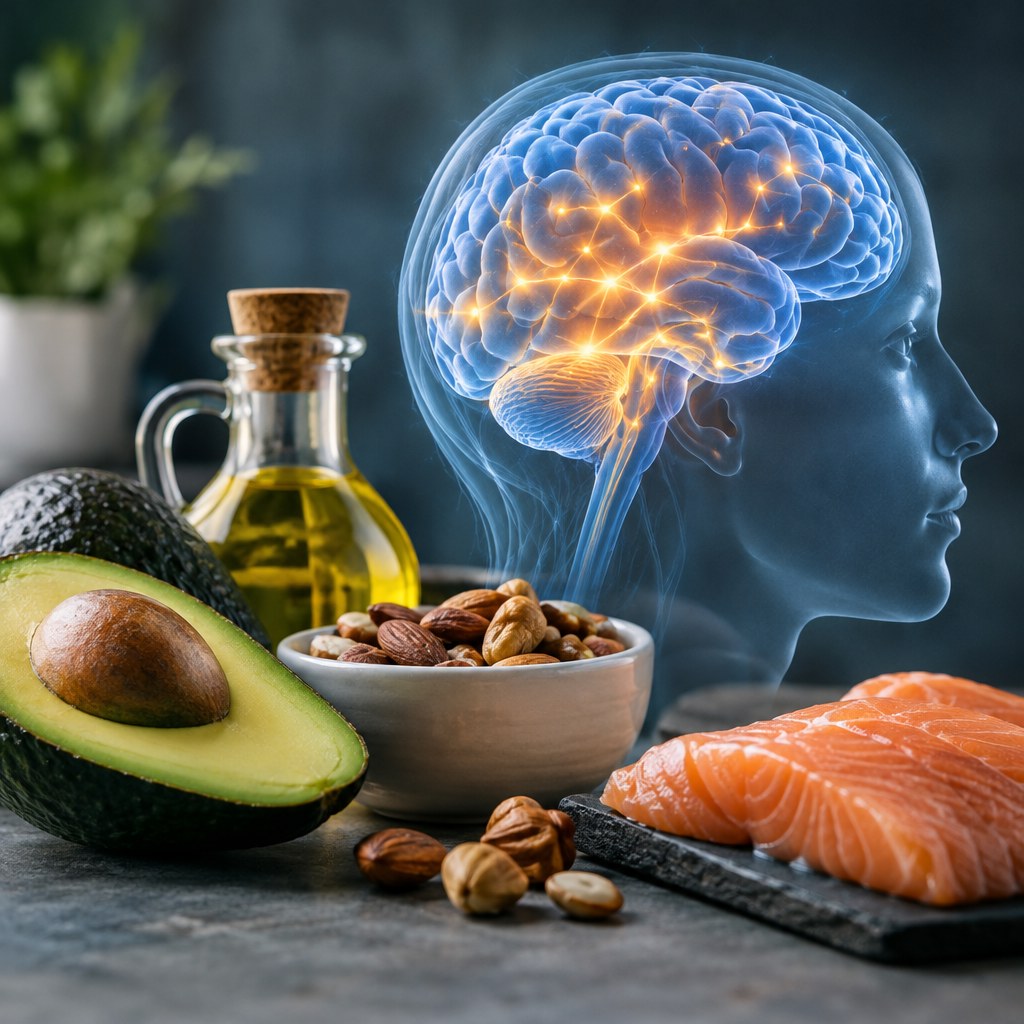
    Illustration combining a glowing brain with food.
    Brain fuel is flexible, but evidence needs careful interpretation.

    What Research Can and Cannot Tell Us

    Ketogenic diets are an established treatment option for some children and adults with drug-resistant epilepsy, under specialist supervision. This is the clearest example of ketones and brain metabolism being clinically useful, although the diet’s effects may involve signaling, neurotransmitters, and mitochondrial function as well as fuel supply. Studies in mild cognitive impairment, Alzheimer’s disease, traumatic brain injury, migraine, depression, and bipolar disorder are smaller, mixed, or early-stage. A biological rationale is not proof that a diet prevents, treats, or reverses these conditions.

    Small human studies sometimes find improved cognitive test performance or brain-energy markers after ketosis, particularly in people with impaired glucose metabolism. Other studies find little difference, and long-term clinical outcomes are uncertain. Effects may reflect weight loss, fewer glucose swings, altered calorie intake, sleep changes, expectations, or the diet itself. It is therefore more accurate to say ketones can fuel the brain effectively than to say they make every brain run better.

    Why Ketones Might Feel Different

    Why might people feel different? Ketone bodies produce energy through pathways that differ from glucose metabolism and may change cell signaling. Beta-hydroxybutyrate also has signaling roles studied in inflammation and gene regulation. Scientists are investigating whether this matters for oxidative stress, neuronal excitability, or insulin resistance in the brain. These mechanisms are plausible, not a permission slip to turn laboratory findings into personal medical conclusions.

    Individual response is shaped by the quality of the diet and the person’s starting point. A keto pattern built around fish, eggs, unsweetened dairy if tolerated, tofu, non-starchy vegetables, nuts, seeds, olive oil, and adequate protein differs greatly from one dominated by processed meats and butter. A nutritious diet that includes carbohydrates can also support brain health. The useful comparison is not keto versus failure; it is a sustainable eating pattern that meets nutritional, cultural, financial, and medical needs.

    Who Should Use Extra Caution?

    A ketogenic diet is a significant intervention, not simply a wellness trend. Speak with a qualified clinician or registered dietitian before changing your diet if you use insulin or sulfonylureas, take blood-pressure medicines or diuretics, have kidney, liver, pancreatic, or gallbladder disease, are pregnant or breastfeeding, have an eating-disorder history, or have had bariatric surgery. Medication doses can require adjustment, and abrupt carbohydrate reduction can create avoidable risks.

    People with type 1 diabetes need particular medical guidance, because ketosis can be difficult to distinguish from evolving ketoacidosis without appropriate monitoring. Keto can also cause constipation, dehydration, nausea, nutrient shortfalls, and unfavorable lipid changes in some people. Seek prompt care for vomiting, deep or rapid breathing, confusion, severe weakness, or persistently high blood glucose—especially if you have diabetes.

    💡 A safer starting point: do not stop prescribed medicines, chase high ketone readings, or assume initial fatigue means the diet is working. Ask what outcome you are testing—fewer seizures, steadier appetite, glucose management, or mental clarity—and decide beforehand how you will measure it.

    A Practical, Evidence-Aware Way to Try Keto

    If you and your healthcare team decide keto is reasonable, make the trial specific and time-limited. Clarify the goal, review medicines, and establish a baseline for symptoms, sleep, bowel habits, mood, and relevant laboratory tests. Plan meals rather than relying on keto-labelled snack foods. Include fibre-rich low-carbohydrate plants where possible, fluids, salt only as individually advised, and enough protein to preserve muscle. People who are older, living with chronic illness, or recovering from illness may need especially individualized advice.

    Track the outcome that matters, not only body weight or urine strips. For example, a person seeking more stable afternoon focus could record sleep, meals, caffeine, concentration, and energy for several weeks. If symptoms worsen, eating becomes stressful, or the approach cannot fit ordinary life, stopping is useful information—not a failure. A Mediterranean-style or other balanced eating pattern may be a better long-term fit.

    The Bottom Line

    Ketones are legitimate brain fuel, and ketosis can be therapeutically valuable in carefully selected situations. Yet current evidence does not show that every person will think more clearly or protect their brain by eating keto. The strongest choice is one based on your health history, preferences, resources, and professional guidance—not a promise made online. Curiosity is reasonable; careful monitoring and compassion for your body matter more than dietary perfection. You do not have to work through uncertainty alone. Take it slowly.

    Find Steady Support While You Decide

    Questions about food, illness, or brain health can feel isolating. Explore free support and practical resources at your own pace today.

    Explore support

    Where specialist guidance supports ketogenic therapy

    NICE epilepsy guidance supports consideration of a ketogenic diet under specialist supervision for selected epilepsy syndromes and drug-resistant epilepsy when other options have failed or are unsuitable. This cannot be generalised to every neurological condition. For Alzheimer’s, the 2021 Phillips trial found improvements in some outcomes but no statistically significant benefit on its main cognitive test.

    Can a normal glucose reading rule out ketoacidosis?

    No. In particular, people using SGLT2 inhibitors can develop ketoacidosis with near-normal glucose. Vomiting, abdominal pain, unusual breathing or confusion require urgent assessment. MHRA medicine safety guidance explains this risk.

    Related reading

    Explore Keto & Metabolic Health, Carnivore & Ketovore and our practical resources.

    Sources checked 22 September 2026. Educational content; dietary changes during illness require individual advice. Illustrations are not patient testimonials or evidence of treatment effects.

  • PCOS and Insulin Resistance: Why Low-Carb Diets Are Being Studied

    PCOS and Insulin Resistance: Why Low-Carb Diets Are Being Studied

    The metabolic question behind PCOS

    PCOS is often discussed as a reproductive condition, yet its metabolic side matters just as much. Polycystic ovary syndrome can affect periods, ovulation, acne, hair growth, weight, fertility, and long-term cardiometabolic health. Insulin resistance does not occur in every person with PCOS, but it is common enough to influence conversations about food, movement, medicines, and monitoring. Low-carbohydrate eating is being studied because lowering carbohydrate intake may reduce after-meal glucose rises and the insulin needed to manage them. The aim is neither a cure nor a universal menu. It is a practical way to consider whether a sustainable dietary change can support symptoms and metabolic health alongside appropriate care.

    Why insulin resistance can matter

    Insulin resistance means body cells respond less effectively to insulin, a hormone that helps move glucose from blood into cells. The pancreas may compensate by producing more insulin. In PCOS, higher insulin levels can stimulate ovarian androgen production and may contribute to irregular ovulation in some people. Genetics, body-fat distribution, sleep, stress, medicines, eating patterns, and other health conditions can all influence insulin sensitivity. PCOS is therefore not a personal failure, and it is not one metabolic pattern for everyone.

    Clinicians commonly assess the wider picture: menstrual pattern, blood pressure, lipids, glucose markers, sleep, mental wellbeing, and goals such as pregnancy planning. A diagnosis or treatment decision should not rest on a single fasting insulin result, which is not standardized as a standalone diagnostic test. If symptoms change or periods become very infrequent, seek clinical advice rather than attempting to self-manage alone.

    Woman with a meal and an anatomical pelvis model.
    Understanding metabolic health involves more than choosing a carbohydrate target.

    Why lower-carbohydrate patterns are being researched

    Researchers are interested because carbohydrate-containing foods generally raise blood glucose after eating, although the size and speed of the rise vary with the food, portion, fibre, preparation, and the individual. Lowering carbohydrate may reduce post-meal insulin secretion and can make it easier for some people to lose weight, if weight loss is one of their goals. These plausible mechanisms explain interest; they do not prove that low carbohydrate directly treats PCOS.

    Human trials are usually small, use different definitions of low carbohydrate, and often combine diet advice with other lifestyle changes. Some report improvements in weight, blood sugar measures, triglycerides, or menstrual regularity. However, study duration is frequently short, dropout can be substantial, and results cannot reliably separate carbohydrate reduction from lower energy intake, coaching, or weight change. Evidence is promising but still developing, especially for outcomes such as fertility, acne, and long-term cardiovascular risk.

    Low carb is a range, not a prescription

    A lower-carbohydrate pattern can range from modestly reducing refined grains, sugary drinks, and sweets to much more restrictive ketogenic plans. Research does not establish one ideal threshold for PCOS. Food quality also matters: vegetables, legumes, fruit, minimally processed proteins, unsaturated fats, and fibre-rich foods offer nutrients that a “low-carb” label alone does not guarantee.

    A practical, person-centred way to test change safely

    For anyone balancing a full schedule, the best plan is usually the one that can be repeated on ordinary weekdays. Begin with an experiment, not a lifetime identity. Agree the goal with a qualified clinician or dietitian where possible: steadier energy, improved glucose markers, weight management, symptom tracking, or preparing for pregnancy require different priorities.

    1. Record a baseline for two weeks: meals, hunger, energy, sleep, periods, and any relevant readings already recommended by your care team.
    2. Choose one or two changes, such as replacing sweetened drinks with water and building breakfast around protein, fibre, and produce.
    3. Plan regular meals, particularly if skipping meals leads to intense hunger or impulsive eating later.
    4. Keep carbohydrate sources that work for you, then adjust portions gradually rather than banning foods overnight.
    5. Review after four to eight weeks using symptoms, satisfaction, food access, and clinician-selected measures, not the scale alone.

    A modest pattern might include eggs or yogurt with berries at breakfast, a bean-and-chicken salad at lunch, and fish, tofu, or lentils with vegetables and a satisfying starch portion at dinner. This is only an example, not a prescription. Cultural foods, budget, shift work, vegetarian eating, and family meals deserve practical adaptation.

    Woman writing notes beside food.
    Small, repeatable meal changes are often more useful than rigid rules.

    Risks, blind spots, and when to pause

    Very restrictive eating can reduce fibre and food variety, worsen constipation, increase preoccupation with food, or become difficult to sustain. It may be unsuitable or need specialist adaptation during pregnancy, breastfeeding, adolescence, a history of disordered eating, kidney disease, or when taking glucose-lowering medicines. People using insulin or medicines that can cause low blood glucose need individualized medical guidance before substantial carbohydrate reduction.

    Do not stop, change, or start prescribed medicines because a diet appears to help. Ask the prescriber how to monitor safely. Seek help promptly for persistent dizziness, repeated low glucose symptoms, severe dietary restriction, worsening mood, or signs that eating is becoming fearful or compulsive. If the plan is not working, recovery may mean adding carbohydrate back, adjusting meal timing, addressing sleep, or choosing a different approach.

    Tip: A food approach should improve daily life, not make health management smaller, lonelier, or more expensive.

    Questions that improve a clinical conversation

    Bring a short record rather than trying to remember everything. Ask: What is my main metabolic concern? Which blood tests or symptoms should we follow? Is weight loss necessary for my goal, or are there other priorities? Could a dietitian help me protect fibre, iron, calcium, and overall nutrition? What would make this approach unsafe or unrealistic for me?

    A short decision framework

    Choose a lower-carbohydrate trial only if it fits your health status, preferences, budget, and capacity. Keep the focus on food quality, adequate nutrition, and measurable goals. Continue recommended medical care and review results with context. If restriction increases stress or harms your relationship with food, step back; a less restrictive pattern can still be worthwhile.

    You do not have to work this out alone

    Reliable information and compassionate support can make decisions feel more manageable. Explore Stronger Together – United We Stand’s support and resources, or speak with a healthcare professional who understands PCOS. Whether you are seeking care for yourself or supporting someone else, start with one conversation and one realistic next step this week that fully respects your circumstances, priorities, and values.

    Explore support

    How the evidence fits current PCOS guidance

    The 2023 International Evidence-based PCOS Guideline found insufficient evidence to favour one diet composition over another for metabolic, hormonal, reproductive or psychological outcomes. It recommends sustainable, individually tailored healthy eating. Small low-carbohydrate studies can inform research without establishing that keto is the best diet for PCOS or improves the chance of a live birth.

    Related reading

    Explore Keto & Metabolic Health, Carnivore & Ketovore and our practical resources.

    Sources checked 22 September 2026. Educational content; dietary changes during illness require individual advice. Illustrations are not patient testimonials or evidence of treatment effects.