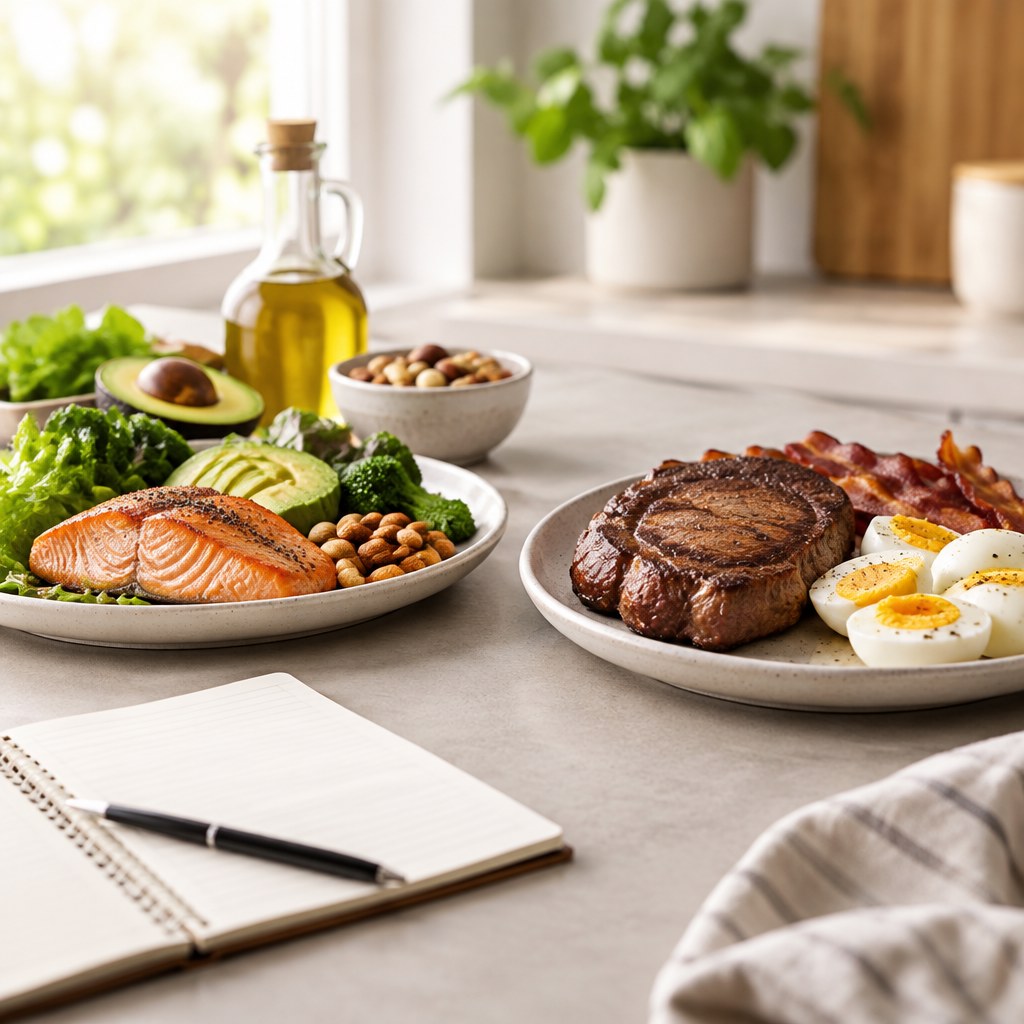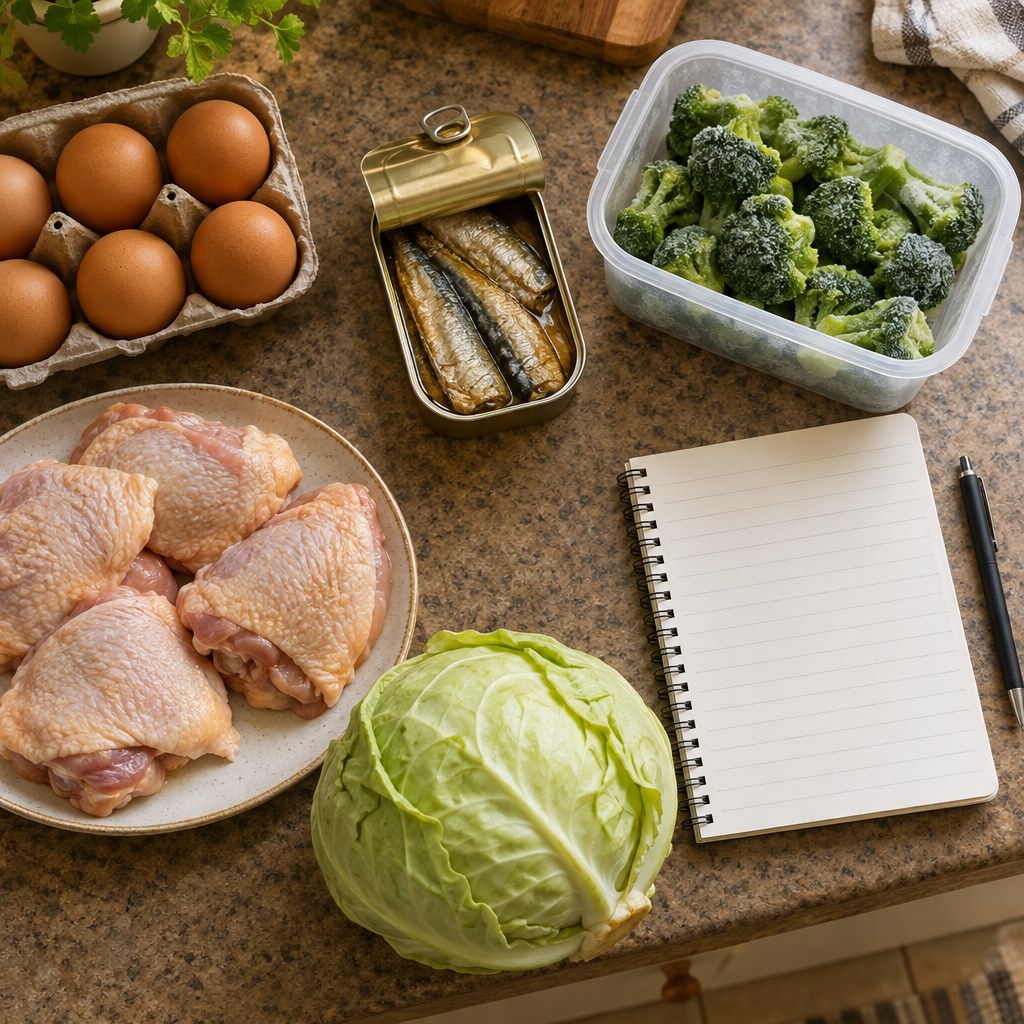
A budget-friendly ketovore approach can be simple: build most meals around affordable animal foods, add low-carbohydrate plant foods if you choose, and buy ingredients you can use in more than one meal. You do not need specialty powders, expensive cuts of meat, or a perfect plan to start cooking nourishing food with what you can realistically afford.
Why keeping meals simple matters
Food changes can feel overwhelming when money, energy, symptoms, or family routines are already stretched. A ketovore pattern may appeal to you because it combines ideas from ketogenic eating, which is low in carbohydrates, with a stronger focus on animal foods. But the label matters less than creating meals that are filling, affordable, and workable for your life.
Choosing a smaller number of reliable ingredients can reduce waste and decision fatigue. Eggs, tinned fish, minced meat, chicken thighs, yoghurt, cheese, frozen vegetables, and inexpensive cuts that benefit from slow cooking can all have a place, depending on your preferences and health needs.
It is also worth keeping expectations grounded. Ketovore eating has not been studied as extensively as many other dietary patterns. Some people report that reducing highly processed foods and refined carbohydrates helps them feel more satisfied, but individual responses vary. It is not a proven cure for chronic illness, pain, mental health conditions, or other medical concerns.
What “ketovore” means in everyday cooking
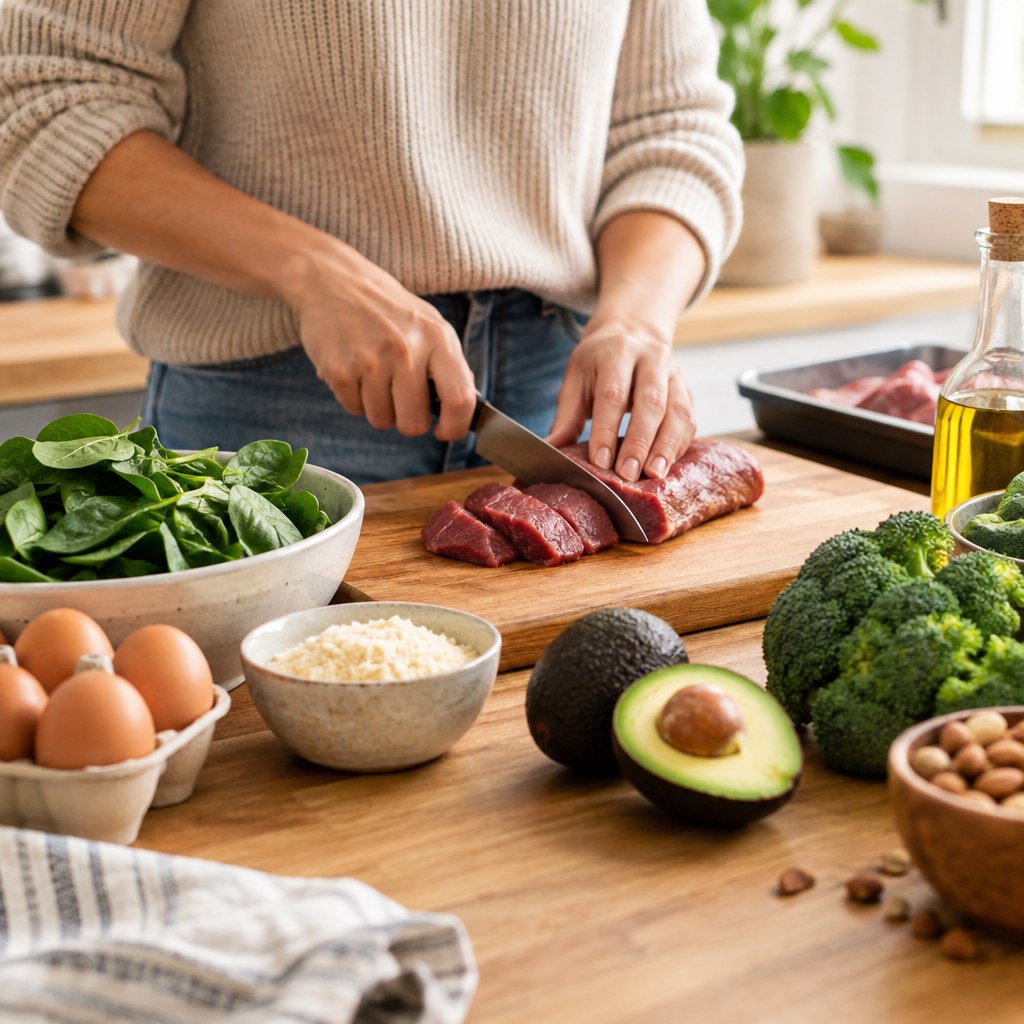
Ketovore is not a tightly defined medical diet. In everyday use, it usually means eating mostly animal-based foods while keeping carbohydrate intake low enough to support a ketogenic approach, if that is your goal. Keto refers to a dietary pattern that greatly reduces carbohydrate foods; some people use it to encourage ketosis, a metabolic state in which the body produces ketones for energy.
A practical ketovore plate might include meat, eggs, fish, or full-fat dairy, with optional low-carbohydrate vegetables such as cabbage, courgette, mushrooms, leafy greens, or cauliflower. The exact balance is personal. You do not have to eat only steak, bacon, butter, or expensive “keto” products.
Nutrient-dense means that a food provides useful nutrients relative to the amount you eat. Eggs offer protein and several vitamins and minerals. Oily fish can provide protein and omega-3 fats. Meat and shellfish can contribute iron, zinc, and vitamin B12. Vegetables, where included, can add fibre and a wider range of micronutrients.
💡 Practical perspective: The most useful version of ketovore is the one you can sustain without skipping needed medical care, overspending, or feeling trapped by rigid food rules.
Build your low-cost food base first
Start with foods that are versatile, satisfying, and often less costly than premium cuts. Prices vary by area, so compare unit prices, look for reductions you will use promptly, and consider frozen or tinned options.
Eggs and dairy
Eggs work for breakfasts, omelettes, egg salad, and tray bakes. Plain yoghurt, cottage cheese, and cheese can add variety if you tolerate dairy.
Tinned and frozen fish
Tinned sardines, mackerel, salmon, or tuna can be convenient cupboard staples. Frozen fish may cost less than fresh and reduces pressure to use it immediately.
Value cuts and mince
Chicken thighs, minced beef, pork shoulder and stewing cuts can make several portions. Slow cooking can make tougher cuts tender and useful. Liver is rich in vitamin A: avoid liver and liver products during pregnancy, and do not make large, frequent portions a routine.
Choose 4 repeatable meal formats
- Egg meal: scrambled eggs with cheese and mushrooms, or an omelette with leftover meat.
- Pan meal: minced meat cooked with cabbage, courgette, or frozen cauliflower, seasoned simply.
- Tray or slow-cooker meal: chicken thighs or a joint cooked once, then used in salads, soups, or reheated bowls.
- Fish meal: sardines or mackerel with boiled eggs, leafy greens, and a mayonnaise or yoghurt-based dressing.
Shop and cook with less waste
Before shopping, check what you already have. Plan around 2 proteins, 1 or 2 low-carbohydrate vegetables, and a few flavour basics such as salt, pepper, herbs, vinegar, mustard, or stock. Buy the amount you can store safely and realistically cook.
Batch cooking does not mean eating the identical plate every day. Cook a larger pack of mince, then use it in a cabbage skillet one day, stuffed mushrooms the next, and an egg-based bake later in the week. Roast chicken can become a hot meal, a cold lunch, and a broth or soup base.
Keep leftovers safe: refrigerate perishable cooked food within two hours (one hour in temperatures above 32°C), keep the fridge at 4°C or below, and use refrigerated leftovers within three to four days or freeze them. Reheat leftovers thoroughly to 74°C. During power cuts, follow local food-safety advice and discard food that has not stayed safely chilled. If fatigue or mobility makes cooking difficult, choose the simplest safe option available, such as tinned fish, boiled eggs, ready-cooked plain chicken, or frozen vegetables.
⚠️ Health note: Speak with a qualified clinician or dietitian before making major dietary changes if you use glucose-lowering medication, take medication for blood pressure, have kidney disease, are pregnant or breastfeeding, have a history of an eating disorder, or manage a serious health condition.
Common budget mistakes and quick fixes
Buying “keto” branded snacks
Convenience foods can be appealing, but they are often expensive and may not be especially filling. Quick fix: keep eggs, cheese, tinned fish, leftovers, or plain yoghurt available instead.
Only buying premium meat
Expensive steaks are not a requirement for nutrient-dense eating. Quick fix: rotate mince, eggs, chicken thighs, tinned fish, and slow-cook cuts according to what is affordable locally.
Making the diet too narrow
Eating the same few foods can become tiring and may leave nutritional gaps. Quick fix: rotate protein sources, include foods you tolerate, and consider discussing your overall intake with a registered dietitian.
Ignoring hydration and digestion
Dietary changes can affect bowel habits, appetite, and fluid needs. Quick fix: drink regularly, introduce changes gradually, and include low-carbohydrate plant foods or other fibre sources if they suit you.
Start with one affordable meal
Choose 2 staple proteins, plan 3 easy meals, and notice what helps you feel nourished and able to continue. Small, realistic changes count.
For more practical encouragement and community support, explore Stronger Together’s free support options and resources. You do not have to face it alone.
Sources and further reading
- Diabetes UK: low-carbohydrate diets and medication safety
- USDA: safe storage of leftovers
- NHS: vitamin A, liver and pregnancy
Source links reviewed 10 October 2026. General information; individual health decisions should be discussed with a qualified healthcare professional. Illustrative images do not depict identified patients or prove treatment benefits.