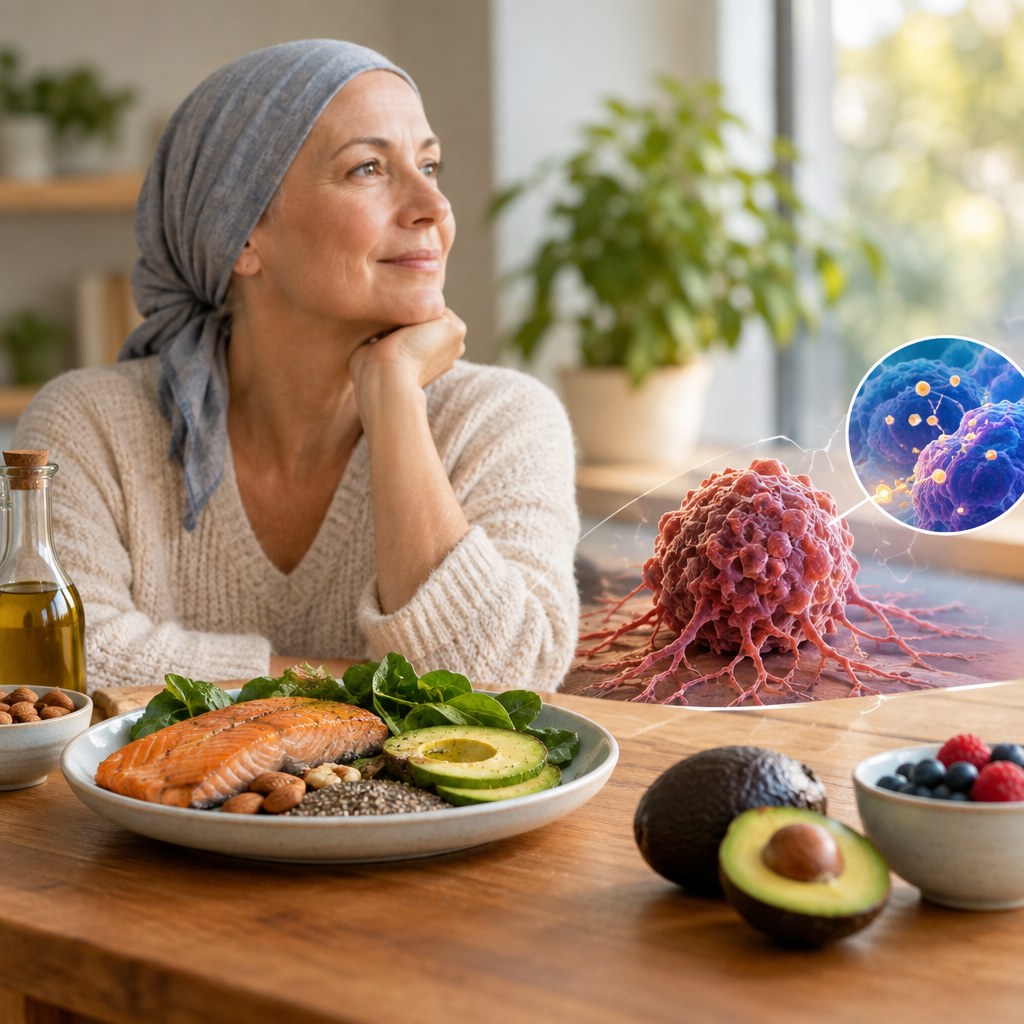
The short answer: promising biology, unproven cancer treatment
A ketogenic diet dramatically reduces carbohydrate intake and usually raises circulating ketones. Because many tumours use glucose avidly, researchers have asked whether lowering glucose availability might slow tumour growth or improve treatment response. The honest answer is: possibly in carefully selected research settings, but not proven as a cancer treatment. Tumours are metabolically diverse, the human evidence remains limited, and restrictive eating can be harmful when cancer already threatens weight, strength, or nutrition.
Keto should never replace surgery, chemotherapy, radiotherapy, immunotherapy, hormone treatment, or a clinician’s nutrition plan. Anyone considering it during cancer care should involve their oncology team and a registered dietitian with oncology experience. That conversation matters most for people losing weight, living with diabetes, taking glucose-lowering medicines, or managing kidney, liver, pancreatic, or digestive problems.
Why glucose metabolism is relevant to cancer
Cancer cells need energy and building materials to divide. Many cancers show high glucose uptake, a pattern used in some PET imaging. This observation is often linked to the Warburg effect: cancer cells may process glucose rapidly even when oxygen is available. It is a useful starting point, not proof that every tumour is dependent on dietary carbohydrate.
Blood glucose is also not the same thing as glucose inside a tumour. The body maintains blood sugar through the liver, hormones, and stored fuels. Meanwhile, cancer cells can adapt by using glutamine, fatty acids, lactate, or other pathways. Some may use ketones rather than being hindered by them. The important question is therefore not whether keto changes a blood test, but whether it changes a particular cancer’s behaviour in a person.

What studies suggest—and what they cannot yet show
Laboratory and animal studies offer reasons to investigate ketogenic diets. In certain models, reducing carbohydrate availability has been associated with slower growth, altered signalling, or improved response to selected treatments. Early human work has mainly examined feasibility, safety, ketosis, body composition, and quality of life. Small studies and case reports cannot establish that keto shrinks tumours, prolongs life, or makes standard therapy work better.
Clinical trials are difficult to interpret because cancers, treatments, calorie intake, and diet adherence differ. A person may have lower glucose yet lose needed muscle; another may not reach sustained ketosis. Researchers also need to separate effects of the diet from effects of weight loss, treatment changes, and intensive dietary support. At present, major cancer guidelines do not recommend ketogenic diets as a routine anticancer therapy.
Why tumour type and treatment context matter
A metabolic approach that appears plausible for one tumour may be irrelevant or risky for another. Brain tumours have received particular attention, but attention is not evidence of benefit. Blood cancers, pancreatic cancer, bowel surgery, steroid treatment, and advanced disease can each create different nutritional considerations. The stage of illness, planned treatment, symptoms, laboratory results, and personal goals all change the risk-benefit discussion.
Potential benefits, realistic limits, and meaningful risks
A supervised ketogenic diet may help some people reduce refined carbohydrates, organise meals, or improve glucose control when diabetes is also being managed. Those outcomes may be personally meaningful, but they are different from treating cancer. It can also be difficult to maintain during nausea, taste changes, mouth sores, diarrhoea, constipation, fatigue, or reduced appetite.
How to discuss keto safely with your cancer team
Do not begin by aiming for a strict macronutrient target. Begin with the problem you hope to solve: managing diabetes, improving appetite, reducing a specific symptom, or exploring an adjunctive approach. Ask whether keto conflicts with your diagnosis or treatment, whether weight maintenance is a priority, and how progress would be monitored. A dietitian can help adapt food choices to symptoms, culture, budget, and cooking capacity.
Useful questions include:
- Could this diet increase my risk of malnutrition or dehydration?
- Should any diabetes medicines be adjusted before changing my carbohydrate intake?
- Which signs—weight loss, dizziness, vomiting, constipation, or weakness—mean I should stop and call?
- Can we set a realistic review date and nutrition goals?
A practical middle path
Many people do not need nutritional ketosis to make supportive changes. If your team agrees, a less restrictive pattern may focus on regular meals, enough protein and calories, fibre as tolerated, hydration, and fewer sugary drinks or highly processed snacks. For example, someone struggling with treatment fatigue might add easy protein foods and convenient vegetables rather than eliminate grains, fruit, and beans. This approach is often easier to adjust when symptoms or treatment schedules change.
If you choose to explore keto, treat it as a monitored nutrition experiment, not a test of willpower. Keep a simple record of intake, symptoms, bowel changes, weight trend, energy, and blood glucose if advised. Share it at appointments. Stop seeking perfection: the safest plan is the one that preserves nourishment and can be changed promptly when your health changes.
Frequently asked questions
Can keto starve cancer?
No. Keto does not starve cancer in the literal sense. Your body still produces glucose, and tumours can access or create fuels through several routes. Lowering carbohydrate intake is not a proven way to eliminate cancer cells.
Is keto safe during chemotherapy?
Sometimes it may be possible, but safety depends on the treatment and the person. Chemotherapy-related nausea, appetite loss, infection risk, diabetes treatment, and weight loss can make a restrictive diet unsuitable. Get individual advice before changing what you eat.
Summary and next step
Keto changes metabolism, but it is not established cancer therapy. Protect nutrition, keep proven treatment central, and ask your oncology team before making dietary changes.
You do not have to navigate cancer nutrition alone
Questions about food can carry hope, pressure, and fear. Bring them into the open with people who will listen. Stronger Together – United We Stand offers community support and practical resources alongside, never instead of, professional cancer care.
A named human trial: ERGO2
Voss and colleagues’ ERGO2 randomised trial (2020) assigned 50 people with recurrent malignant glioma to reirradiation with either a usual diet or a short calorie-restricted ketogenic diet and fasting intervention. The primary outcome, progression-free survival at six months, did not differ significantly: 20% versus 16%. Achieving ketosis did not demonstrate improved cancer control. This specific combination and patient group cannot establish that keto treats other cancers.
The National Cancer Institute’s guidance on diets and supplements explains why dietary claims should not replace treatment. A registered trial is evidence that a question is being studied, not evidence that the intervention works.
Related reading
Explore Keto & Metabolic Health, Carnivore & Ketovore and our practical resources.
Sources checked 22 September 2026. Educational content; dietary changes during illness require individual advice. Illustrations are not patient testimonials or evidence of treatment effects.
Leave a Reply