
Author: Soulsearcher

  • Metabolic Syndrome: The Cluster of Problems Many People Don’t Know They Have

    Metabolic Syndrome: The Cluster of Problems Many People Don’t Know They Have

    Why a quiet cluster deserves attention

    Metabolic syndrome is not one disease. It is a pattern of health changes that often develops quietly: higher blood pressure, raised blood sugar, unhealthy blood fats, and excess waist size. When several occur together, the likelihood of heart disease, stroke, and type 2 diabetes rises. Many people feel well, so routine screening matters.

    The useful outcome is not panic or self-diagnosis. It is a clear way to notice risk, arrange appropriate checks, and take sustained steps with a clinician and supportive people around you. For families and caregivers, understanding these linked risks can make everyday support more practical.

    What clinicians mean by metabolic syndrome

    Clinicians generally identify metabolic syndrome when a person has at least three of five findings: a larger waist measurement, elevated triglycerides, lower HDL cholesterol, raised blood pressure, or raised fasting glucose. Cutoffs can vary by country, sex, and clinical guideline, so results need interpretation in context. A single result does not confirm the syndrome.

    The pattern matters because these changes commonly travel together. Insulin resistance, in which the body responds less effectively to insulin, can contribute to higher glucose and triglycerides. Blood pressure, sleep, activity, food patterns, genetics, some medicines, and hormonal changes may also play roles. The diagnosis is a risk signal, not a verdict about effort or character.

    It can be especially easy to miss when appointments focus on only one number. Looking at the full picture gives a better basis for prevention and shared decisions. Ask which measurements were taken, what they mean together, and when they should be repeated.

    Woman checking her blood pressure with an upper-arm cuff at home.
    Routine checks can show linked risks before symptoms are noticeable.

    Why it develops and why work and life matter

    Metabolic syndrome has no single cause. It becomes more likely with increasing abdominal fat, limited physical activity, smoking, poor sleep, long-term stress, ageing, and family history. Conditions such as polycystic ovary syndrome, sleep apnoea, and fatty liver disease can be relevant. Some people develop risk despite doing many things “right,” which is why blame is unhelpful.

    Work can shape the daily conditions behind risk. Long periods sitting, irregular shifts, limited meal breaks, fatigue, financial pressure, and scarce access to care can make change harder. This does not make an employer responsible for diagnosis; it does make supportive policies, flexible breaks, safe movement opportunities, and confidential health benefits potentially valuable.

    A non-judgemental conversation with your healthcare professional is a useful starting point. Explain the barriers that make a plan hard to follow. A plan that respects culture, budget, pain, disability, caregiving demands, and mental health is more likely to be used.

    Screening turns uncertainty into useful information

    A clinician can review blood pressure, waist measurement, fasting glucose or HbA1c, triglycerides, and HDL cholesterol, alongside medical history and medicines. HbA1c estimates average blood glucose over recent months, but it is not suitable for every situation. Ask whether fasting is required before tests, how results compare with prior values, and what follow-up is appropriate.

    Do not rely on online calculators or a workplace screening alone. They can prompt a conversation, but they cannot assess symptoms, pregnancy, medication effects, or other causes of abnormal results. Seek emergency medical help for chest pain, sudden weakness, severe breathlessness, or other signs of a medical emergency.

    If you have already been told that a result is high, ask for a repeatable monitoring plan. The goal is not perfect numbers next week; it is a safer direction over time.

    Woman seated at a table with a scale, blood pressure monitor, fruit and salad.
    Knowing your baseline helps you choose the next sensible step.

    A practical plan: begin with the next workable step

    Lifestyle change is first-line care for many people, but the details should fit the individual. A clinician may also recommend medicines to manage blood pressure, cholesterol, triglycerides, or glucose. Never stop or alter prescribed treatment without professional advice.

    1. Choose a starting point. For one week, note sleep, meals, movement, alcohol, tobacco, stress, and medicines without trying to be perfect. Patterns—not guilt—guide the next choice.
    2. Build meals around vegetables, fruit, pulses, whole grains, and protein sources that suit your needs. Reduce frequent sugary drinks and highly refined snacks gradually. If considering keto or another restrictive plan, discuss it first if you use glucose-lowering medicine, are pregnant, or have kidney disease.
    3. Break up sitting and add movement you can repeat: walking calls, brief stretch breaks, resistance work, or adapted rehabilitation exercises. Aim for consistency and safety rather than an intense restart after inactivity.
    4. Protect sleep and address smoking, alcohol, and stress with practical support. This may include a stop-smoking service, counselling, pain management, or assessment for sleep problems. Small environmental changes, such as a regular break or water nearby, can support follow-through.
    5. Review progress after the agreed interval. Bring home readings, questions, and any side effects to appointments. If the first plan is not realistic, say so early. Adjusting the plan is good care, not failure.

    Risks, common mistakes, and a safer recovery plan

    The biggest mistake is treating metabolic syndrome as a short-term detox project. Extreme dieting, unregulated supplements, or punishing exercise can worsen fatigue, trigger injury, or interfere with medicines. Another mistake is focusing only on weight. Blood pressure, glucose, lipids, sleep, fitness, and waist changes all deserve attention.

    💡 Tip: Avoid assuming that feeling fine means there is no risk. Also avoid interpreting one test in isolation. If results are concerning, arrange review rather than searching for a quick fix. If changes have slipped during illness, bereavement, or a demanding period, return to the smallest useful action today.

    People with diabetes, cardiovascular disease, kidney disease, liver disease, pregnancy, eating-disorder history, or complex medicines need personalised guidance. Urgent symptoms always take priority over lifestyle planning.

    A short decision framework

    First, confirm the facts: which measurements are outside range, and have they been repeated when appropriate? Second, consider context: health conditions, medicines, work, finances, sleep, and support. Third, choose one or two changes that are safe and measurable. Finally, agree on review with a qualified clinician. This framework replaces vague worry with a plan you can revisit.

    Ask the clinician which risk matters most now and what a realistic next step would be. Involve family or other supporters only with your agreement.

    You do not have to figure this out alone

    Book a routine review, then explore Stronger Together’s support and resources for compassionate practical encouragement. Public support is free; donations are optional.

    Further information

    The National Heart, Lung, and Blood Institute explains metabolic syndrome, including its five component conditions. A clinician should interpret your results and recommend individual care.

  • Making Everyday Spaces More Accessible for a Loved One

    Making Everyday Spaces More Accessible for a Loved One

    Accessibility begins with ordinary routines

    A home, workplace, shop, or community venue can become difficult to use long before anyone intends it to. A narrow route, slippery bathroom floor, confusing sign, heavy door, or rushed conversation may turn a familiar task into a daily barrier. For a loved one living with disability, dementia, chronic illness, injury, fatigue, grief, or sensory change, access is not about making life look clinical. It is about preserving choice, safety, privacy, and participation. Small, thoughtful adjustments can reduce strain for everyone while respecting the person’s preferences and independence.

    The aim is a space that supports the whole person, rather than asking them to adapt constantly to the space. Start with what matters most to them: making tea, answering the door, reaching a desk, welcoming customers, resting without worry, or joining family meals. This article offers a practical way to notice barriers, choose proportionate changes, and review whether those changes genuinely help.

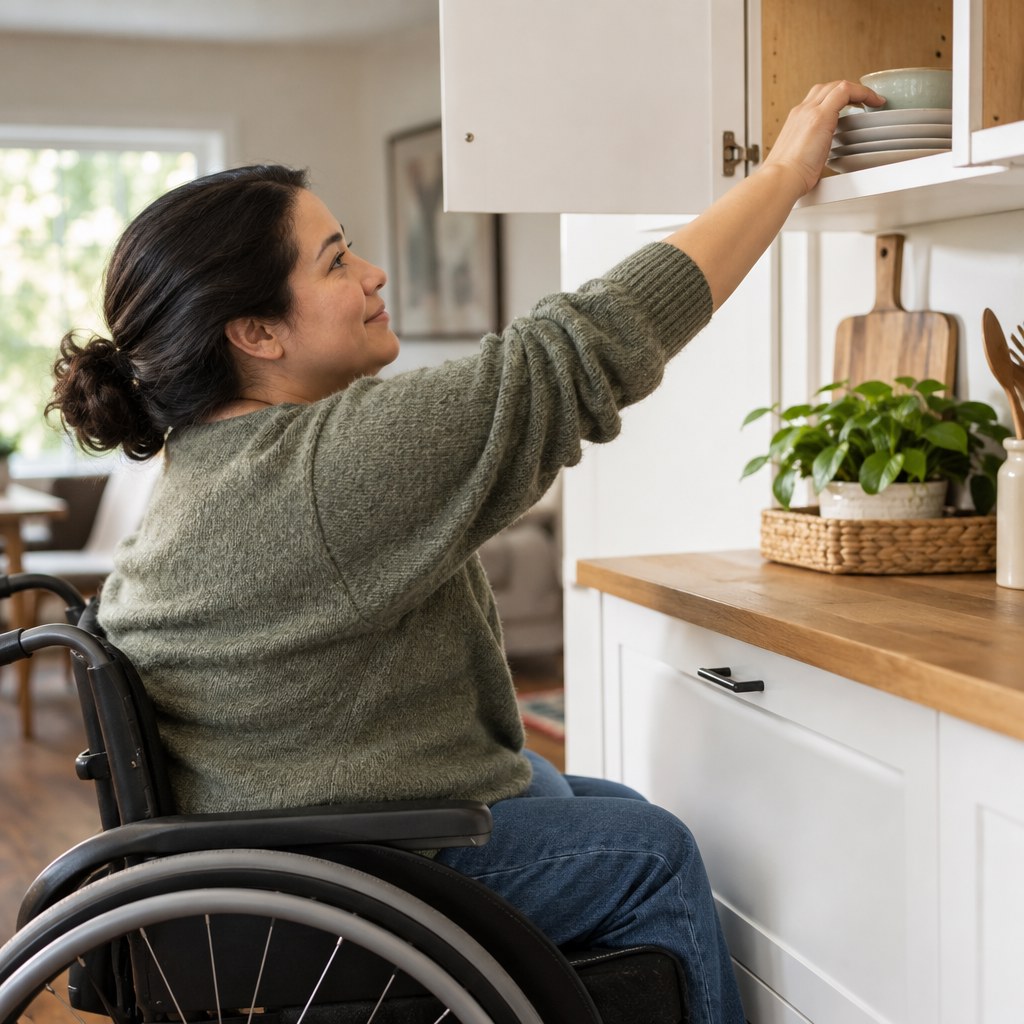
    Woman using a wheelchair reaching up to dishes in a high kitchen cupboard.
    High cupboards can put everyday items out of reach. Ask which items should be moved to an accessible height.

    Why ordinary spaces create barriers

    Barriers rarely have one cause. A person’s mobility, vision, hearing, memory, concentration, pain, stamina, or ability to process busy surroundings may vary from day to day. Environments also change: furniture moves, lighting fades, deliveries block entrances, and routines become hurried. In businesses and shared settings, a barrier may affect visitors, staff, volunteers, or family carers as well as the person you first had in mind. Looking at the interaction between a person, a task, and a place prevents assumptions and leads to more useful solutions.

    Accessibility is therefore a conversation, not a checklist imposed on somebody else. Ask permission before changing personal areas. Invite the loved one to describe what feels tiring, unsafe, embarrassing, confusing, or unnecessarily slow. Observe only with consent, and treat their experience as the starting point. A family member may notice a loose rug; the person using the room can explain whether the real problem is glare, balance, pain, or not having a nearby place to sit.

    Choose changes by impact, not appearance

    Begin with the routes and tasks used most often. An entrance, bedroom, bathroom, kitchen, work station, reception desk, or vehicle transfer may deserve attention before a larger redesign. Focus first on changes that remove a clear obstacle or reduce the chance of harm. Examples include clearing cables from walkways, improving even lighting, adding high contrast labels, choosing stable seating with arms, fitting easy-grip handles, or placing frequently used items between shoulder and knee height. These are examples, not universal prescriptions; needs differ.

    Low disruption options

    Low cost changes are often worth testing before permanent work. Rearrange rather than replace furniture, reduce visual clutter, use nonslip backing where appropriate, and create a consistent landing place for keys, medication, mail, mobility aids, or visitor information. In a public-facing setting, keep an unobstructed route to the counter and provide a quieter place to wait when feasible. Test one adjustment at a time, so you can tell what has improved.

    💡 Tip: Treat a trial change as information, not failure. If it is awkward or unused, ask why, adjust it, or remove it.

    Complete a respectful access review

    Set aside time when neither of you is rushed. Walk through a usual day together, from arriving and unlocking the door to preparing food, working, washing, resting, and leaving. For someone with fluctuating energy, review the difficult times of day as well as their best times.

    1. Map the route. Note every doorway, turn, threshold, surface change, seat, switch, sign, and storage point. Record where help is needed and what happens when the task cannot be completed.
    2. Identify the priority. Ask which barrier limits dignity, participation, safety, work, or rest most. Choose one or two issues rather than attempting everything at once.
    3. Match the response. Consider simple layout changes, equipment, communication adjustments, or professional advice. A qualified occupational therapist, accessibility specialist, contractor, or workplace lead may be helpful when a change involves safety, building work, or formal responsibilities.
    4. Try and review. Agree what success looks like, such as less reaching or fewer reminders. Check in after use, especially if symptoms, routines, or staffing change.
    Woman using a wheelchair reaching for a mug on an open shelf.
    Check shelf heights and reach with the person who uses the space.

    Build accessibility into everyday practice

    For decision makers, accessibility works best when it is part of ordinary maintenance and service, not a last-minute exception. Give staff permission to report trip hazards, blocked routes, unclear signs, broken lighting, or inaccessible digital and printed information. Include access questions when purchasing furniture, scheduling events, planning refurbishments, or changing visitor procedures. Offer clear ways for people to request support without having to disclose more personal information than necessary. A respectful response can be as important as a physical alteration: allow time, speak directly to the person, and avoid moving mobility equipment or personal belongings without asking.

    Risks to avoid and how to recover

    Do not make changes over someone’s objections simply because they seem sensible. Removing familiar objects, rearranging a kitchen, or adding equipment without agreement can increase distress and reduce trust. Avoid treating one solution as permanent when needs fluctuate. Also avoid relying on temporary fixes that create new hazards, such as trailing extension leads, unstable stools, loose mats, or furniture that narrows an escape route. If a change has not worked, return to the person’s experience: What is harder now? What feels better? Pause the change if necessary, document the concern in a workplace, and seek appropriate professional guidance for complex mobility, personal care, or building issues.

    A simple decision framework

    Start with the person and the task. Then consider the place, the likely benefit, the effort required, and any new risk. Choose the least disruptive useful change, test it with consent, and review it together. If the barrier remains or safety is uncertain, involve a suitably qualified professional. Accessibility is ongoing care for a shared environment, not a one-time project.

    Take the next manageable step

    Choose one room, route, or routine to review this week. Write down what the person says matters, make one agreed change, and notice its effect. You do not need to solve everything alone. Explore Stronger Together’s support and resources for compassionate connection and practical information; public support is free, and donations are optional. A small, respectful improvement today can make tomorrow’s routines feel more possible, familiar, and shared. Start gently today.

    Explore support

  • When Grief Comes in Waves: Finding Support on Difficult Days

    When Grief Comes in Waves: Finding Support on Difficult Days

    Why grief can feel unpredictable

    Grief rarely follows a steady path. A conversation, anniversary, empty chair, medical appointment, financial task, or ordinary song can bring loss sharply back into the present. These surges may arrive after a death, during a loved one’s illness, after trauma, or when disability and changing roles reshape family life. They do not mean you are failing, moving backward, or grieving incorrectly.

    The difficult day is often not the whole story, but it can demand immediate care. The goal is not to force grief away. It is to recognize the wave, reduce pressure, and choose support that fits the moment. With a simple plan, individuals, families, caregivers, and workplace leaders can respond with steadiness while leaving room for real feeling.

    What brings the waves closer

    Grief has emotional, physical, social, and practical triggers. Fatigue, poor sleep, caregiving strain, conflict, administrative demands, and isolation can lower the capacity to cope. Dates and places matter, but so do quieter changes: a child reaching a milestone, a former routine ending, or a new diagnosis. For people living with chronic or invisible illness, grief may include repeated losses of energy, independence, certainty, or belonging.

    A wave can also follow progress. Returning to work, attending a family gathering, or clearing a drawer may highlight what has changed. There is no universal timetable. However, noticing patterns can replace self criticism with useful information: this is a hard hour, this task needs company, or this date deserves fewer commitments.

    Woman offering an arm around another woman seated under a blanket.
    A quiet pause can make space for the next manageable step.

    Choose support that fits the day

    Different waves call for different forms of support. A person may need someone to listen today and practical help tomorrow. Support does not have to be a long conversation or a major decision. The most useful option is often the one that is available, safe, and specific.

    Start with one safe person

    Send a direct message: “Today is difficult. Could you sit with me, call for ten minutes, or help with one errand?” Naming the request makes it easier for others to respond. If speaking feels too hard, use a prepared text, voice note, or agreed signal. A caregiver can also ask someone to stay with the person they support while they rest, walk, or attend an appointment.

    Use peer and community support

    Peer support can reduce isolation because people do not have to explain every feeling from the beginning. A support space may offer shared understanding, practical ideas, and permission to speak honestly. It is general support, not a replacement for clinical care. Explore Stronger Together’s support options when connection would help, and use the resources page to look for information at your own pace.

    Professional and urgent help

    Consider a licensed mental health professional or a healthcare professional when grief is persistently disrupting safety, sleep, work, caregiving, or daily functioning, or when it feels impossible to carry alone. In an immediate emergency, contact local emergency services or a crisis service in your area. If you are unsure, tell a trusted person plainly: “I am not coping safely and need help now.”

    Make support easier to accept

    People often want to help but do not know what to offer. Keep a very short list of requests: a ride, prepared meal, childcare, help with paperwork, a meeting companion, or a brief check in. Clear, specific options make it easier to accept care without managing another long conversation.

    Write this list down and share it with someone you trust.

    A difficult day plan you can use

    Plans work best when they are brief enough to follow while upset. Write yours on paper or save it in a phone note. Review it on a calmer day with a family member, friend, colleague, or care partner, then revise it as your needs change.

    1. Name the wave. Say what is happening without judging it: “I miss them,” “I am overwhelmed,” or “This appointment is bringing everything back.”
    2. Lower the next demand. Postpone nonessential decisions, simplify meals, cancel one optional task, or ask for practical help.
    3. Ground in the present. Drink water, sit somewhere steady, notice five things you can see, or take a slow walk if that feels safe.
    4. Make one connection. Contact the person on your list, join a support conversation, or ask someone to check in later.
    5. Choose a closing ritual. Light a candle, play a meaningful song, write a few lines, or place tomorrow’s first task where you will see it.

    For business owners and managers, a plan can include a private check in, flexible deadlines where possible, and clear coverage for essential tasks. Do not require disclosure. Offer choices, protect confidentiality, and agree on the next workable step rather than expecting someone to “bounce back.”

    Woman wrapped in a blanket with another person's hand resting on her shoulder.
    Small, dependable actions can help carry a demanding day.

    Common mistakes, and a kinder recovery

    One common mistake is treating a surge as proof that nothing has improved. Another is waiting until distress is unbearable before telling anyone. Some people overcommit to stay busy; others withdraw completely. Neither response makes a person weak. If a plan did not work, review it gently: Was the request too vague? Was the supporter unavailable? Did the day need professional or practical help instead?

    Avoid comparing grief with someone else’s timeline or demanding gratitude before pain has been acknowledged. Avoid using alcohol, substances, or risky behavior to numb intense feelings; reach out instead. Recovery can be modest: drink water, send the message you delayed, reschedule one task, and return to your plan tomorrow.

    💡 A useful boundary: supporters can listen and help with practical steps, but they cannot solve grief on demand. Let care be consistent rather than perfect.

    A short decision framework

    On a difficult day, make three decisions. First, ask: is this a wave I can meet with rest, routine, and connection, or do I need professional or urgent help? Second, choose one person or support space to contact. Third, reduce the day to one essential responsibility and one caring action. This framework respects both reality and capacity. Grief may remain present, yet you can still make a safe next choice.

    You do not have to carry this alone

    Support can begin with one honest message, one quiet pause, or one shared conversation. Visit Stronger Together to explore free public support and practical resources; donations are optional.

    Find support

    Further reading

    General information. Service arrangements and emergency numbers in international resources may differ from South Africa.

  • Creating a Simple Caregiving Plan When One Person Cannot Do Everything

    Creating a Simple Caregiving Plan When One Person Cannot Do Everything

    When Caregiving Has Become Too Much for One Person

    Caregiving often begins with one committed person stepping in: a partner, adult child, friend, or colleague. Over time, appointments, meals, personal care, paperwork, transport, supervision, and emotional support can turn a generous commitment into an unsustainable role. The problem is not a lack of love or competence. It is that one person cannot reliably cover every need, every day, while also protecting work, health, finances, and relationships.

    A simple plan does not make illness, disability, dementia, grief, or recovery easy. It makes responsibility visible and shareable. This article shows how to map needs, choose realistic helpers, create a usable weekly schedule, and prepare for changes. The goal is not perfection. It is a safer, steadier arrangement where nobody has to carry everything alone.

    Why Informal Caregiving Plans Fail

    Most families do not set out to create confusion. They respond to the next urgent task. When roles remain unspoken, the most available person becomes the default for every decision. That can lead to missed handoffs, resentment, exhaustion, and preventable crises.

    Workplaces and community groups can face a similar pattern when a staff member, client, or member needs practical support. Good intentions help, but informal arrangements can depend on memory and goodwill. A written plan gives everyone a shared reference point, including the person receiving care whenever they can participate.

    Women discussing a written plan around a table.
    A written plan turns concern into coordinated, manageable support.

    Build the Plan Around Real Needs

    Start with a calm conversation rather than a crisis meeting. Ask the person receiving care what matters most to them and what help feels acceptable. Then list tasks without assuming that family members will automatically take them on.

    Separate essential needs from preferences. Essential needs might include safe meals, mobility support, personal care, medication routines managed by the appropriate professional, appointments, and urgent contacts. Preferences may include a particular shopping day, visitor, or activity. Both matter, but this distinction helps the group decide what must be covered first.

    Create Clear Categories

    Use plain categories: daily living, health coordination, home and finances, connection, and emergencies. For each category, write the task, frequency, preferred helper, backup helper, and any instructions. Keep sensitive details only where they are genuinely needed and store the document securely.

    Choose Help That Matches Capacity and Consent

    Sharing care does not mean assigning people vague promises such as help more. Instead, match each task to a person’s actual capacity. Consider time, skills, location, comfort level, and the care recipient’s consent. Someone who lives nearby may handle groceries. Another person may be better placed to coordinate calls, paperwork, or a weekly check-in.

    No helper should be expected to provide clinical care, make medical decisions, or manage medicines beyond their role and training. When needs exceed informal support, ask an appropriate healthcare, social care, legal, financial, or workplace professional what options apply locally.

    💡 Tip: Name a coordinator, not a controller. The coordinator keeps the plan current and flags gaps; they do not have to complete every task.
    Two women reviewing an open notebook together at a table.
    Small, specific roles make it easier for people to contribute.

    Turn the List Into a Weekly Working Plan

    Keep the first version short. One page is often enough. A shared paper sheet, calendar, or secure digital document can work if everyone can access it. Choose one format rather than scattering information across texts, notebooks, and memory.

    Review the plan at a predictable time each week. Confirm what changed, who is unavailable, which appointments are coming up, and whether the person receiving care wants anything handled differently. Record decisions briefly so nobody has to reconstruct them later.

    Use a Simple Task Record

    A useful record answers five questions: What needs doing? Who owns it? When is it due? Who covers absence? Where are the relevant details?

    Task Owner Timing Backup Notes
    Breakfast support Jordan Daily Sam Preferred foods listed
    Transport to appointment Lee Tuesday Jordan Confirm pickup day before
    Bills and forms Morgan Friday Lee Store documents securely

    Step by Step: Start This Week

    1. Bring together the person receiving care and the people who may help. If a full meeting is stressful, collect views separately.
    2. Write every recurring task, including unseen work such as ordering supplies, checking messages, and arranging transport.
    3. Mark tasks as essential, helpful, or optional. Identify anything that requires professional input or formal authority.
    4. Ask each helper to choose specific tasks and state clear limits. A reliable no is more useful than an uncertain yes.
    5. Add backups for essential tasks, emergency contacts, and a simple way to report changes.
    6. Set a review date within two weeks. Adjust before a small gap becomes a serious problem.

    Risks and Mistakes That Undermine a Good Plan

    Do not confuse a plan with a promise that every problem will disappear. Health, energy, employment, money, and family circumstances change. The plan must be flexible enough to change without blame.

    Common warning signs include repeated missed tasks, one helper silently covering gaps, arguments about expectations, or the caregiver cancelling their own essential appointments. Treat these as information, not failure. Pause, simplify the workload, and seek additional advice or services where appropriate.

    ⚠️ Warning: Avoid making one person the permanent emergency backup. If they are unavailable, the plan needs another response, such as a relative, neighbour, paid provider, workplace adjustment, or professional service.

    A Simple Decision Framework for the Next Step

    When deciding what to do next, use three questions. Is this task essential to safety, dignity, health, or daily stability? Is there a named person who has agreed and is able to do it? Is there a backup if circumstances change? If any answer is no, the task is a priority for discussion.

    Start small: choose the few responsibilities that create the most pressure, then build outward. A plan succeeds when people can understand it, use it, and revise it with honesty.

    You Do Not Have to Carry Care Alone

    A clearer plan can protect the person receiving care and the people around them. If you need a place to begin, explore practical information and compassionate peer support. Stronger Together – United We Stand offers free public support, and optional donations help sustain that work. Take one next step today: share the task list, ask for a specific commitment, or review available resources with someone you trust. Even a brief conversation can replace uncertainty with a more workable shared direction for everyone involved.

    Explore Support

    Further reading

    General information. Service arrangements and emergency numbers in international resources may differ from South Africa.

  • Caregiver Guilt: Making Room for Rest Without Losing Your Sense of Care

    Caregiver Guilt: Making Room for Rest Without Losing Your Sense of Care

    Needing rest does not cancel your care

    Caregiver guilt can appear when you sit down, leave the house, lose patience or wish someone else would take over. You may know that you are exhausted and still feel that a break is something you should earn. When another person depends on you, even a small pause can seem to carry consequences.

    Guilt is a feeling worth listening to, but it is not a reliable measure of how well you are caring. Sometimes it points to a task that needs attention. Sometimes it reflects a promise no person could keep: always being patient, available and able to prevent every difficult outcome.

    The aim is to identify what needs doing, arrange suitable support and allow your needs to be part of the plan. You can love someone and need time away from responsibility.

    Separate a practical concern from self-blame

    Ask yourself what, specifically, you fear will happen if you rest. “Their lunch will be missed” is a problem you can plan around. “A good daughter would never want a break” is a harsh rule about yourself. Treating those thoughts as the same problem can leave you trying to solve an impossible standard by working harder.

    Write two short notes: the actual care need and the help required to cover it. If something was missed or you spoke sharply, make the repair you can. Apologise where appropriate, address the task and consider what would reduce the pressure next time. Replaying the moment endlessly does not create more support.

    Woman seated with a mug and blanket while an older person rests nearby.
    Rest can preserve the attention that loving care requires daily.

    Choose a break that would actually help

    Rest can mean sleep, a quiet meal, seeing a friend, attending your own appointment or spending time without making decisions for anyone else. It does not have to look productive. An hour full of chores may be time away from direct care without being much of a break.

    Start with a period you can describe clearly: “Wednesday from two until three” is easier to arrange than “sometime when things settle down.” If a longer break is not available, a shorter pause may still matter. It is also reasonable to say that short pauses are no longer enough and ask about more substantial support.

    A checklist before stepping away

    • Essential needs: Identify what must happen during the break, including meals, agreed medicine routines and any supervision the person requires.
    • Suitable cover: Confirm that a willing person has accepted the role and can safely carry it out. Clinical tasks require appropriate skills and guidance.
    • A clear handover: Share necessary instructions, contact details and the person’s preferences without sharing more private information than needed.
    • A backup: Agree what happens if the helper cannot attend or the person’s needs change.
    • Your availability: Decide when you will return and which circumstances require contact before then.

    Keep this proportionate to the situation. Some people need substantial supervision; others can safely spend time alone and may value their privacy. Involve the person receiving care in arrangements wherever possible rather than assuming what they need.

    Ask for a commitment, not a vague promise

    People may say “let me know if you need anything” without understanding the work involved. Give them one task they can accept or decline. For example: “Could you stay with Dad between two and four on Saturday? I will leave the agreed instructions and emergency contact numbers.”

    Someone who cannot provide direct care might organise transport, collect supplies or prepare food. Ask about their limits too. A dependable small commitment is more useful than an ambitious offer that leaves you covering the gap at the last minute.

    Our guide to creating a simple caregiving plan includes a way to record tasks and backups. The National Institute on Aging also offers guidance on sharing caregiving responsibilities.

    Woman holding a mug while an older person rests on a sofa behind her.
    Planning a break makes space for care and your wellbeing.

    Use a kinder response when guilt returns

    You may still feel guilty after arranging everything carefully. That feeling does not automatically mean the arrangement is wrong. Try answering it with the facts: “Lunch is covered, the helper knows the plan, and I will be back at four.” You do not need to win an argument with every anxious thought before taking the break.

    1. Name the thought: “I am telling myself that resting means I do not care.”
    2. Check the situation: Is an essential need uncovered, or am I uncomfortable letting someone else help?
    3. Take the appropriate action: Resolve a real gap; otherwise, return to the agreed plan.
    4. Review afterwards: Ask what worked and what needs changing before the next break.

    If the arrangement fails, revise it without treating that setback as proof that you must do everything forever. A missed handover may call for clearer instructions, a different helper or professional input.

    When family help is not enough

    If care needs exceed what you can safely provide, discuss options with the relevant healthcare or social care team. Ask what respite, home support or other services may be available locally, including eligibility and costs. If you feel threatened or anyone is in immediate danger, prioritise safety and contact local emergency help.

    Persistent distress also deserves attention. A qualified professional can help you explore guilt and coping; practical help is still needed when the workload itself is too much. For companionship, our article on loneliness while caring offers manageable ways to reconnect.

    Choose one responsibility to discuss with someone this week. Rest belongs in a workable care plan because you are a person with needs too.

  • Nutrition and Chronic Illness: How to Evaluate Online Advice

    Nutrition and Chronic Illness: How to Evaluate Online Advice

    Nutrition information should help you make a decision

    When you live with chronic illness, food can become another source of uncertainty. One video recommends avoiding whole food groups; another promises better energy or a healthier brain. You may be trying to manage symptoms, feed a family and stay within a budget while deciding whom to trust.

    A useful nutrition resource should make the evidence and its limits understandable. It should also leave room for your medical history, medicines, preferences and everyday circumstances. This guide offers a practical way to assess online advice and prepare questions for a qualified healthcare professional.

    Start with the exact claim

    Before deciding whether advice is useful, write down what is actually being promised. “This meal is convenient” is different from “this diet treats a disease.” A story about one person’s experience cannot establish what caused their improvement or whether the same approach will help someone else.

    The National Center for Complementary and Integrative Health explains why evidence matters: health claims should be supported by relevant research, with opinion and personal testimony distinguished from research findings. Look for links you can open, rather than accepting “studies show” on its own.

    A quick screening checklist

    • Who is speaking? Check relevant qualifications and whether the information has been reviewed.
    • What is the evidence? Does the source link to research that addresses the actual claim and the condition being discussed?
    • What is missing? Look for possible harms, uncertainty, limitations and people for whom the approach may be unsuitable.
    • Is something being sold? A product, paid programme or affiliate link is worth knowing about when weighing advice.
    • How current is it? Check the date and whether newer guidance has changed the picture.

    Be precise about diabetes and “reversal”

    Some people with type 2 diabetes can achieve remission. This does not mean that every diet can produce it, that everyone will reach it, or that ongoing medical follow-up is unnecessary. The NIDDK discussion of type 2 diabetes remission explains why remission is different from a cure: blood glucose can rise again.

    Do not interpret a personal success story as a reason to stop prescribed treatment. Advice about type 2 diabetes also must not be assumed to apply to type 1 diabetes. If a video leaves the type of diabetes unclear, that is a question to resolve before acting.

    Match a food plan to your care plan

    For people with diabetes, meal timing and food choices need to fit medicines, activity and other health conditions. Skipping or delaying meals can cause low blood glucose with insulin or certain other diabetes medicines. NIDDK’s healthy living guidance describes working with a care team to find an individual approach.

    If you are considering fasting, a restrictive diet or major changes to how much you eat, discuss the plan before starting, especially when medicines or other conditions are involved. Ask who will review the plan, what needs monitoring and how to report concerns. A registered dietitian can help translate medical advice into meals that are practical for you.

    Keep hope separate from a guarantee

    A confident headline about brain health may be discussing a theory, an association or an early study rather than a proven treatment. Those distinctions matter. Ask whether the research measured a change in a laboratory marker, symptoms, daily functioning or the occurrence of disease. These are different outcomes.

    It is reasonable to be interested in emerging research and still wait for stronger evidence. You do not have to defend a diet or reject every new idea to take your health seriously. Keep the question specific: “What does this evidence support, and what does it leave unanswered?”

    Bring a short question sheet to your appointment

    1. Save the source. Keep the link and note the specific claim or timestamp rather than bringing a long collection of clips.
    2. Explain your goal. Say whether you want help with appetite, meal preparation, symptoms, glucose management or another concern.
    3. List current care. Include prescribed medicines and any supplements or diet changes you already use.
    4. Ask about suitability. “Does this advice apply to my condition? What are the possible benefits, harms and alternatives?”
    5. Agree on follow-up. Ask what to monitor and when the plan should be reviewed.

    Our guide to preparing for a medical appointment can help you organise the conversation. If asking for support feels difficult, try the examples in explaining your needs with an invisible illness.

    Make everyday eating easier to manage

    Sometimes the immediate difficulty is shopping, opening packaging or finding the energy to cook. Write down which part is hardest. Ask a trusted person for one specific task, such as collecting groceries, portioning a meal that fits your existing plan or helping you prepare questions for a dietitian.

    A plan you can afford and carry out deserves attention alongside its nutritional aims. Tell your care team if cost, fatigue, swallowing difficulties, nausea or food access are getting in the way. Those practical barriers are relevant to your care, not a failure of willpower.

    A useful next step

    Choose one nutrition question that would make daily life easier, check one reliable source and take that question to the appropriate professional. Community discussion can offer companionship and ideas; it does not establish that a treatment works. This article provides general information and does not replace individual medical or dietary advice.

    Explore our resources and support hub for further starting points.

  • Invisible Illness: How to Explain Your Needs and Ask for Support

    Invisible Illness: How to Explain Your Needs and Ask for Support

    Understanding the gap between appearance and reality

    An invisible illness is a health condition whose effects are not immediately apparent to other people. Pain, fatigue, cognitive changes, sensory overload, dizziness, and fluctuating capacity may shape an entire day without producing an obvious outward sign. The practical problem is not only managing symptoms; it is also handling disbelief, unwanted advice, and expectations built around how well someone looks.

    This guide offers a workable approach for communicating needs, protecting limited energy, and deciding when to seek workplace or professional support. It is general information, not medical, mental-health, or legal advice. Individual needs differ, so clinical questions belong with a qualified professional.

    Woman holding her forehead while another woman gestures behind her.
    Invisible symptoms can require visible understanding and practical support.

    Why misunderstanding happens

    People often use visible cues to judge capacity. If someone works, smiles, or attends one event, observers may assume they can do everything else. Symptoms can also vary by hour or day, making necessary cancellations look inconsistent. Limited public knowledge, rushed workplace processes, and the belief that illness must be observable all widen the gap.

    The most useful response is not to prove every symptom. It is to translate impact into specific information: what is difficult, what adjustment would help, and what remains possible. For example, “Morning meetings are unreliable; scheduling after noon improves my attendance” gives a decision maker something actionable.

    Key principle: A person does not owe everyone a complete medical history. Share enough to support the request, with more detail only where it is useful, safe, or formally required.

    A step-by-step communication plan

    Five steps for a clearer request

    Prepare so symptoms do not have to be explained under pressure. Use this sequence with colleagues, clients, or practitioners:

    1. Name the impact. Describe the functional barrier rather than trying to make another person feel the symptom: “Standing for long periods increases my difficulty.”
    2. Ask for one concrete change. Suggest a later deadline, written instructions, remote attendance, a quiet room, seating, breaks, or another realistic adjustment.
    3. Set a boundary. Try: “I am not discussing whether my condition is real. I am available to discuss what will help me complete this task.”
    4. Confirm important decisions. After a workplace or service conversation, send a brief factual note recording the request, agreed actions, owner, and review date.
    5. Choose the right channel. A trusted peer may offer validation, while a clinician addresses health concerns and an appropriate adviser handles employment policies or rights.

    For business owners and practitioners, respond by asking what barrier exists, what outcome matters, and which reasonable options can be tested. Document consent before sharing health information, limit access, and revisit arrangements because capacity may change.

    Common mistakes and how to recover

    Overexplaining is a common response to disbelief, but it can consume energy and invite debate. If a conversation becomes an interrogation, pause it: “I have shared the information relevant to this decision. Let us return to the requested change.”

    Another mistake is promising consistency to appear dependable. A better plan uses ranges, backup arrangements, and early warning points. If you overcommit, acknowledge it promptly, revise the deliverable, and identify what would make the next commitment more reliable.

    For listeners, avoid demanding proof, comparing illnesses, praising someone for “pushing through,” or treating flexibility as lower standards. If you responded poorly, apologize without defending your intent, ask what support is useful now, and follow through.

    Urgent help: New, severe, or rapidly worsening symptoms require prompt advice from an appropriate health service. If there is immediate danger, use local emergency support.

    A short decision framework

    Before responding to misunderstanding, ask four questions:

    • Is this person responsible for a decision, or am I spending energy seeking validation?
    • What minimum information explains the functional impact?
    • What specific change would protect health and still support the shared outcome?
    • Should this conversation involve a clinician, manager, human-resources contact, advocate, or trusted supporter?

    Use the answers to choose among a direct request, a written plan, a professional consultation, or disengagement from an unproductive debate. Keep a simple record of patterns, requests, and results. This can reduce repeated explanations and help practitioners or decision makers review what actually works.

    Peer support can reduce isolation and provide practical language, but it does not replace assessment or treatment. The Support and Resources pages on Stronger Together United We Stand can help readers identify possible next steps.

    What Would Help You Next?

    You do not have to work out the next step alone. Choose the option that is most useful to you now.

    Further reading

    General information. Service arrangements and emergency numbers in international resources may differ from South Africa.

  • Living With an Invisible Illness When People Don’t Understand

    Living With an Invisible Illness When People Don’t Understand

    The Reality of Looking “Fine” With an Invisible Illness

    Living with an invisible illness means that symptoms are not always apparent to other people. Pain, fatigue, dizziness or difficulty concentrating can affect a whole day even when someone looks well. Some conditions cause both visible and less visible symptoms, and a person may use a mobility aid on some days but not others. Appearance alone cannot tell you how much support someone needs.


    Woman resting in an armchair under a blanket beside a window.
    Managing an invisible illness requires constant mental and physical balancing.

    The Emotional Toll of Not Being Believed

    The mental load of managing hidden symptoms while constantly appearing “fine” leads to a deeply exhausting type of burnout. When colleagues or well-meaning family members remark, “But you look so healthy,” it can feel highly invalidating.

    The emotional burden of not being believed forces individuals to constantly advocate for their own reality. You find yourself explaining repeatedly why you cannot participate in certain activities or why you need specific accommodations. Over time, this necessity to perform wellness while secretly managing severe pain, brain fog, or extreme immune deficiency drains your precious mental reserves. The psychological exhaustion of masking your condition can sometimes rival the physical symptoms themselves. Acknowledging this emotional fatigue is a critical first step toward self-compassion and sustainable symptom management.

    Navigating the Physical Reality: Pacing and Protecting Energy

    Different illnesses need different treatment and support. For people with ME/CFS, activity management, often called pacing, aims to balance activity and rest within individual limits to reduce post-exertional symptom worsening. It is not a cure, and a routine that helps one person may not suit another. Discuss symptoms and suitable activity with a clinician who understands your condition.

    A practical starting point is to notice which activities are difficult, what support helps and whether symptoms worsen afterwards. Where appropriate, break tasks into smaller parts, sit for activities that can be done seated, and arrange help with demanding jobs. There is no universal five-minute rule or fixed energy budget. Pacing does not replace treatment for immune disorders or guarantee that flare-ups will be prevented. See the CDC guidance on managing ME/CFS for condition-specific information.


    Hand resting beside a mug, medicine blister pack, book and glasses.
    Pacing yourself and communicating your needs are vital strategies for daily life.

    Communicating Your Needs to Family, Friends, and the Workplace

    Effective communication with loved ones and employers is a formidable challenge when your symptoms are entirely hidden. Family members may misinterpret a lack of physical energy as disinterest, while employers might mistakenly view required medical accommodations as a lack of professional dedication.

    Clear, consistent communication is essential. You do not owe everyone a comprehensive medical history, but you can set firm boundaries. Explaining, “I have a fluctuating health condition, and today my symptoms require me to rest,” centers the focus directly on your current need. In the workplace, focus discussions on productivity and practical accommodations rather than the illness itself. Frame conversations around what specific tools or flexible hours you need to perform your job effectively despite your invisible condition.

    Practical Checklist for Daily Management

    🔋

    Track Your Energy

    Keep a simple journal to identify patterns in your fatigue. Understanding what triggers a symptom flare-up allows you to plan proactively and avoid pushing past your physical limits on difficult days.

    🗣️

    Set Firm Boundaries

    Practice a few standard responses for when people question your illness. Having a polite but firm script reduces the mental stress of having to explain yourself constantly to skeptical individuals.

    📋

    Prioritize Essential Tasks

    Separate your daily tasks into mandatory and optional categories. When your energy is low, give yourself complete permission to abandon the optional tasks without guilt. This simple adjustment preserves your energy.

    Finding Professional and Peer Support

    Isolation can be one of the most difficult consequences of living with an invisible illness. Because others cannot see your daily battle, it is incredibly easy to feel entirely alone. Connecting with people who share similar experiences may help you feel understood. Finding a community that inherently understands the exhaustion and the daily compromises can lift a massive weight off your shoulders.

    If distress is persistent or difficult to manage, consider a qualified mental health professional familiar with chronic illness. Peer support and clinical care serve different purposes. Our Support page and Resources page provide starting points for exploring information and support.

    💡 Tip: When communicating with someone who doesn’t understand your condition, try using the “battery analogy.” For example: “My available energy changes from day to day, and some ordinary tasks use more of it than you might expect.” Use the comparison only if it fits your experience.

    You Do Not Have to Walk This Path Alone

    Choose the next step that feels most useful. Support and public resources are free to access.

    Disclaimer: The content provided in this article is for informational and editorial support purposes only. It is not intended to diagnose, treat, or replace professional medical advice. Always consult with a qualified healthcare provider regarding symptom management, treatment plans, or medication changes.
  • I Realised This Morning That I Lost My Mom Two Years Ago

    I Realised This Morning That I Lost My Mom Two Years Ago

    I realised this morning that I lost my mom two years ago

    I woke up this morning and started crying.

    It wasn’t the usual sadness. Not the tears I have cried on my way to work, or on the way home, trying to pull myself together before walking through the door again.

    These were different.

    These were tears of mourning.

    Because this morning, I realised something I think part of me has known for a long time:

    I lost my mom two years ago.

    The person I am caring for is still here physically, but the woman I knew as my mother is disappearing beneath the illness.

    The anger. The aggression. The cruelty. The shouting. The behaviour that can make me feel more like a servant than a daughter.

    That is not the mother I remember.

    It can’t be.

    My mother had faults. Of course she did. We all do. But she was a good person.

    She was the kind of person who would go out of her way to help somebody else. She never swore. She gave me everything I could have wanted as a child, but somehow managed to do it without spoiling me.

    And there is one sentence she said throughout my life that I will probably carry with me forever:

    “There are things in life you don’t want to do, but you have to.”

    I understand those words differently now.

    Grieving Someone Who Is Still Here

    Caring for someone you love can ask things of you that you never imagined you would have to do. It can strip away sleep, freedom, patience, certainty and sometimes even the relationship you once had with that person.

    And perhaps one of the cruellest parts is that nobody tells you when you are allowed to grieve.

    There is no funeral.

    No clear goodbye.

    The person is sitting in front of you, and yet you can still miss them desperately.

    You can love the person they were, care for the person they have become, feel hurt by their behaviour, feel angry, exhausted and heartbroken — all at the same time.

    This morning I finally understood that I am not only caring for my mother.

    I am mourning her too.

    And maybe that is something we need to talk about more.

    Trying to Understand What Dementia Changes

    And then another thought came to me.

    What if, underneath everything, we are more like machines than we want to admit?

    What if the part of the brain that holds our memories, our judgement, our restraint, our sense of who we are begins to fail — and what is left is simply reaction?

    For a moment I wondered whether that is what I am seeing now. Not my mother as I knew her, but a body still functioning after so much of the person inside has been stripped away.

    But then I asked myself: if that is true, where does all the anger come from? Where does the violence come from?

    I know the medical explanation. I know dementia damages the brain. I know areas responsible for judgement, inhibition, memory and emotional control can stop working as they once did.

    Maybe that is part of the answer.

    Maybe when all the layers that taught us how to contain fear, frustration and confusion begin to disappear, the most basic reactions are the ones left exposed.

    I don’t know.

    Separating the Illness From the Person

    But I do know this: when she is angry with me, I have to keep reminding myself that the illness is speaking through a brain that no longer works the way hers once did.

    That does not make being shouted at, threatened or hurt easy.

    It does not mean a carer should simply accept abuse.

    But sometimes understanding where it may be coming from is the only thing that helps me separate the illness from the mother I remember.

    I don’t have all the answers. I’m living this as I write it.

    But if you are caring for someone who is slowly disappearing in front of you, perhaps you recognise some of these feelings.

    The anger. The guilt. The exhaustion. The grief for somebody who is still sitting beside you.

    If you do, I want you to know that there is a place here where we can talk about the things people don’t always know how to say.

    Because sometimes being stronger together simply begins with knowing that somebody else understands.

    — Soulsearcher

    If This Feels Familiar, You Do Not Have to Carry It Alone

    Choose the next step that feels most useful to you.

    Editorial note: changes in dementia and caregiver safety

    This account expresses one caregiver’s grief. People with dementia retain dignity and may experience needs they cannot easily communicate. Sudden changes in behaviour deserve medical assessment: pain, infection, medicines or other problems can contribute. See the Alzheimer’s Association guidance on behaviour changes. If anyone is at immediate risk, seek emergency help and move to safety if possible.