Category: Caregiving & Family Support

  • Mobility and Disability: Practical Ways to Support Independence at Home

    Mobility and Disability: Practical Ways to Support Independence at Home

    Supporting independence at home means matching the space, daily routines and support around you to the way you move now—not forcing you to work around barriers. Small, well-chosen changes can make transfers, bathing, cooking, rest and leaving the house safer and less tiring while preserving privacy, control and confidence.

    Older woman using a walking frame beside a handrail
    Practical adjustments can help your home work with your needs.

    Start with the real barriers, not the product list

    Mobility needs can change after an injury, surgery, stroke, neurological condition, chronic pain flare, ageing-related changes or periods of fatigue. They may also vary across the day. A home that feels manageable in the morning can become difficult when pain, weakness, dizziness or exhaustion increases.

    Before buying equipment or planning alterations, identify the moments where you lose time, feel unsafe or need more help than you want. Look at the complete journey: getting out of bed, reaching the toilet, preparing food, answering the door, managing laundry, taking medication and getting outside.

    Notice the interaction between person, task and environment

    A threshold is not automatically a problem; it becomes one if it catches a foot, blocks a wheelchair or makes you fear a fall. Similarly, a shower may be accessible for one person but unsafe for someone who cannot stand for long or who struggles with balance. The best solution considers your abilities, goals, home layout and budget together.

    • Which tasks make you rush, strain, twist or reach too far?
    • Where do you steady yourself on furniture that could move?
    • What happens during a bad day, not only a good day?
    • Which activities matter most to your identity and routine?
    • What support is reliable, and what needs to be possible when you are alone?

    💡 Tip: Keep a short note for 7 days. Record when a task is difficult, what makes it harder and what helps. This gives an occupational therapist, rehabilitation professional or trusted family member a clearer starting point than a general description of “mobility problems.”

    Prioritise safety without taking away control

    Falls and injuries can happen during ordinary activities, especially around stairs, bathrooms, loose flooring, poor lighting and cluttered routes. Yet safety does not mean removing every challenge or making decisions for someone else. Independence grows when you can make informed choices and use support that fits your preferences.

    Make the main routes easier first

    Focus on the path between the bed, bathroom, kitchen and exit. Remove trailing cables, unstable rugs and furniture that narrows a route. Keep commonly used items between waist and shoulder height where possible. Improve lighting at entrances, stairs, hallways and beside the bed, with switches or lamps you can reach before moving.

    If you use a cane, walker, wheelchair or other aid, measure routes while using it. Door width, turning space, thresholds and the position of handles can matter more than a room’s overall size. Avoid assuming that an item marketed as “accessible” will suit your body or home.

    Plan for transfers and personal care

    Transfers—such as moving from bed to chair, chair to toilet or standing in the shower—often need the most careful assessment. Grab rails, raised toilet seats, shower chairs, transfer benches and bed aids can be useful, but they must be correctly positioned and securely fitted. A poorly placed rail can encourage an awkward movement or fail to support the load placed on it.

    Ask a qualified occupational therapist, physiotherapist or other appropriate professional to assess more complex transfers, particularly if you have recently fallen, have changing strength, use a hoist, or need another person to assist you. This protects both you and anyone helping you.

    Choose changes in layers

    Home adaptations do not always begin with major building work. Often, the most helpful approach is to make lower-risk changes, test them in daily life and then consider larger alterations if they solve a continuing problem. This can prevent expensive purchases that do not fit your needs.

    🏠

    Everyday layout

    Move essentials closer, create a seated rest point and reduce unnecessary trips between rooms. These changes are often reversible and can reveal what support you need most.

    🔧

    Equipment and fittings

    Consider aids that address a specific task, such as a shower seat or rail. Check fit, weight limits, cleaning needs and installation requirements before use.

    📐

    Structural adaptations

    Ramps, level-access showers, widened doorways and stair solutions may offer lasting benefits when smaller changes no longer meet your needs.

    For substantial work, seek independent advice before committing. You may need to check building rules, tenancy agreements, insurance requirements, local funding options and whether future needs could affect the design. Requirements differ by location, so confirm them with relevant local services or qualified contractors.

    Build a practical home independence plan

    A clear plan turns good intentions into changes you can use. If you support a family member, develop it with them rather than around them. Ask what “independence” means to them: cooking independently, getting to the garden, managing personal care privately or being able to leave home safely may each require different solutions.

    Use this step-by-step checklist

    1. Choose 3 priority activities. Start with what matters most and what carries the greatest immediate risk.
    2. Observe the task safely. Note the route, reaching, turning, standing time and any point where balance or pain changes.
    3. Try simple adjustments. Reorganise storage, improve lighting, add a chair or clear a route before assuming a major adaptation is necessary.
    4. Seek an assessment when needed. Ask a clinician or occupational therapist about falls, transfers, mobility aids, fatigue management or more complex equipment.
    5. Test and review. Use changes in ordinary routines. If they create discomfort, instability or extra effort, stop and reassess.
    6. Record emergency information. Keep important contacts, access instructions and relevant health information in a place you can reach easily.

    Technology may also help when it is chosen for a clear purpose. Voice-controlled lights, reminder systems, video doorbells and personal alert devices can reduce certain barriers. However, they depend on setup, charging, connectivity and your comfort with using them. Keep a non-digital backup for essential tasks.

    Common mistakes—and how to recover

    A frequent mistake is buying equipment quickly after a difficult day. A device may be unsuitable if it is the wrong height, does not fit the bathroom, requires more grip strength than expected or changes the way you transfer. Keep receipts where possible, follow manufacturer instructions and ask for professional advice before modifying equipment yourself.

    Another risk is treating a temporary improvement as a complete solution. If your condition is progressive, fluctuating or still being assessed, choose options that can adapt where practical. For example, leave enough room to use a mobility aid in a reorganised kitchen, rather than creating a narrow route that only works today.

    ⚠️ Emergency warning signs: Call emergency services immediately for sudden weakness or numbness, new confusion, chest pain, severe breathing difficulty, collapse, or a fall with serious injury. Do not assume these are part of an existing condition. Other new or worsening mobility changes need prompt clinical assessment.

    Finally, avoid overlooking emotional impact. Losing access to part of your home or needing help with personal care can bring frustration, grief or anxiety. These feelings are understandable. Talk openly with people you trust, and consider peer support alongside professional care when you need it.

    A simple decision framework

    Choose the next change by asking 3 questions: Does it make an important activity safer or easier? Does it preserve your choice and dignity? Can you use and maintain it reliably? Start with the highest-priority barrier, involve appropriate professionals for higher-risk tasks, and review changes as your needs develop.

    Independence is not doing everything without help. It is having meaningful control, practical options and support that lets you live as fully as possible at home.

    You do not have to work this out alone

    Explore practical support and community resources as you plan the next step for yourself or someone close to you.

    Find support

    Sources and further reading

    Source links reviewed 10 October 2026. General information; individual health decisions should be discussed with a qualified healthcare professional. Illustrative images do not depict identified patients or prove treatment benefits.

  • Sepsis Recovery: What Families Should Know After Hospital Discharge

    Sepsis Recovery: What Families Should Know After Hospital Discharge

    Recovery from sepsis often continues long after hospital discharge. Your family may be managing fatigue, weakness, memory changes, low mood, disrupted sleep and fear of becoming unwell again, while also arranging medicines, appointments and practical help. A clear plan can make the transition home safer and help you know when to seek urgent care.

    Caregiver offering water to an older man seated on a sofa
    Recovery is gradual, and practical support can reduce pressure at home.

    Why recovery can be difficult after sepsis

    Sepsis is the body’s extreme response to an infection. It can affect organs, circulation, muscles and the brain, particularly when someone has needed intensive treatment or a long hospital stay. Even after the infection is controlled, the body may need time to rebuild strength and resilience.

    Some people experience symptoms often described as post-sepsis syndrome. These may include severe tiredness, muscle or joint pain, breathlessness with activity, poor concentration, forgetfulness, nightmares, anxiety or depression. Symptoms vary widely. They do not mean that recovery has failed, but they should be discussed with the healthcare team, especially if they are worsening.

    Older adults, people with long-term conditions, people living with disability and those who had a complicated admission may need more support. Recovery can also be emotionally demanding for relatives who watched a loved one become critically ill.

    Start with a safe discharge plan

    Before or immediately after discharge, keep the written discharge summary somewhere accessible. It should explain the diagnosis, treatments received, medicines, follow-up arrangements and any restrictions. If something is unclear, contact the ward, primary care practice, pharmacist or named discharge coordinator rather than guessing.

    Confirm the essentials

    • Know which medicines to take, their purpose, timing and common side effects.
    • Ask whether any usual medicines were stopped, changed or need review.
    • Check dates for follow-up appointments, blood tests, wound care or rehabilitation.
    • Arrange transport, food, mobility equipment or home support before these needs become urgent.
    • Keep a current medicine list and discharge summary available for every appointment.

    💡 Tip: Bring a family member or trusted friend to the first follow-up visit when possible. They can take notes, ask questions and help compare the care plan with what is happening at home.

    Build recovery around small, realistic steps

    Rest matters, but complete inactivity can make weakness worse. Follow the rehabilitation advice given at discharge and increase activity slowly. For example, you might begin with short, supervised walks around the home, regular position changes and simple daily tasks, then pause before exhaustion sets in.

    Good nutrition and hydration support healing, but needs differ if your relative has kidney disease, heart failure, diabetes, swallowing problems or dietary restrictions. Ask a clinician or dietitian for personalised advice rather than starting a restrictive diet during recovery. Small, regular meals may be easier than large portions when appetite is low.

    Track patterns, not perfection

    A simple daily note can record sleep, food and fluid intake, activity, pain, mood, confusion, breathlessness and new symptoms. This gives the healthcare team useful information and helps you notice gradual gains that may otherwise be missed. Avoid setting recovery deadlines. Some days will be harder than others.

    Support thinking and emotional wellbeing

    Confusion, poor memory and difficulty concentrating can make paperwork, medicines and decision-making harder. Use written reminders, a calendar and one task at a time. Keep conversations calm and allow extra time for answers. Persistent low mood, panic, nightmares or withdrawal deserve support from a healthcare professional; emotional recovery is part of physical recovery, not an optional extra.

    Know the warning signs that need urgent action

    Sepsis can recur if a new or worsening infection develops, and other complications can also arise after discharge. Trust your instincts if the person seems suddenly much more unwell than expected. Do not wait for a routine appointment when symptoms are severe or escalating.

    ⚠️ Seek urgent medical help now for new confusion, difficulty staying awake, severe breathlessness, blue or mottled skin, a new widespread rash, seizures, chest pain, very little urine, uncontrolled shaking, or rapidly worsening illness. Follow local emergency-service guidance if you think someone may be seriously unwell.

    Contact a clinician promptly for fever or chills, worsening cough, painful urination, increasing redness or discharge from a wound, repeated vomiting, new swelling, medication side effects or a clear decline in function. These signs do not always mean sepsis, but early assessment is safer than waiting.

    Common mistakes families can avoid

    Trying to “push through” exhaustion is a common setback. Balance activity with planned rest, and ask the clinical team what level of exertion is appropriate. Equally, do not assume all tiredness, pain or confusion is simply part of recovery; report new, sudden or worsening symptoms.

    A second mistake is taking on every task alone. One person may coordinate appointments, another may prepare meals, and another may check in by phone. If you are caring for someone, protect your own sleep, work commitments and medical needs as well. Sustainable support is better than burnout.

    Finally, avoid changing prescribed medicines, supplements or diet plans without advice. “Natural” products can still interact with treatment or be unsuitable during recovery.

    A practical decision framework for the weeks ahead

    Use three questions each day: Is the person gradually stable or improving? Are they able to eat, drink, rest and manage essential medicines? Has anything changed suddenly or become harder? Stable progress supports the existing plan; persistent problems justify a follow-up call; sudden deterioration needs urgent assessment.

    Keep recovery focused on safety, steady rehabilitation and connection. Your family does not need to solve every problem at once. The next useful step may simply be confirming a prescription, arranging transport or asking for an assessment of new symptoms.

    You do not have to manage recovery alone

    Explore practical support and community resources as you navigate the next stage of sepsis recovery. Public support is free, and donations are optional.

    Find support

    Sources and further reading

    Source links reviewed 10 October 2026. General information; individual health decisions should be discussed with a qualified healthcare professional. Illustrative images do not depict identified patients or prove treatment benefits.

  • Pressure Injuries and Bedsores: Prevention, Early Signs and Care

    Pressure Injuries and Bedsores: Prevention, Early Signs and Care

    Why pressure injuries matter

    A pressure injury can begin quietly when skin and the tissue beneath it are squeezed between a bony area of the body and a bed, chair, brace, or medical device. It may affect someone recovering from illness, living with limited mobility, or spending long periods in one position. It can be painful, slow recovery, and sometimes lead to serious infection. Yet many injuries are preventable when you notice risk early and act steadily.

    This matters whether you are caring for yourself or supporting somebody else. You do not need specialist language to begin. Regular, respectful checks, comfortable repositioning, attention to food and fluids, and prompt advice when skin changes can protect comfort and independence. Prevention is not about blame: illness, frailty, poor circulation, reduced sensation, and continence problems can all raise risk. A shared plan makes daily care safer.

    What a pressure injury is

    A pressure injury, often called a bedsore or pressure ulcer, happens when pressure, or pressure combined with rubbing and sliding, reduces blood flow to an area. Skin needs that blood flow for oxygen and nourishment. Common sites include heels, ankles, hips, tailbone, elbows, shoulder blades, and the back of the head. Devices such as oxygen tubing, casts, or masks can also press on skin. Injuries range from skin that is discoloured but unbroken to deeper wounds. Darker skin may show a change in shade, warmth, firmness, or tenderness rather than obvious redness.

    Healthcare teams may describe stages, but you do not need to stage an injury yourself. Your job is to recognise a new change, reduce further pressure where safely possible, and ask for help. Do not massage a sore or red area; rubbing can damage fragile tissue. If a person has diabetes, poor circulation, spinal cord injury, or cannot feel discomfort reliably, take even small changes seriously.

    Illustration of a caregiver helping an older woman lie on her side with a pillow
    Small skin changes deserve calm, timely attention.

    Practical prevention steps for today

    The best routine is one that fits the person’s abilities, care setting, and clinical advice. If they use a pressure-relieving mattress, cushion, or device, make sure it is correctly fitted and used as instructed.

    • Change position regularly. Encourage small shifts in bed or chair when possible, and follow the repositioning schedule supplied by a clinician. Use pillows or positioning aids to keep bony areas from pressing together. Avoid dragging across sheets; use help or equipment to reduce friction.
    • Inspect skin daily, especially heels, tailbone, hips, elbows, and beneath devices. Look in good light and use a mirror or trusted helper for hard-to-see places. Compare both sides of the body. Note persistent colour changes, warmth, coolness, swelling, hardness, softness, pain, or itching.
    • Keep skin clean and gently dry, particularly after sweating or leakage. Use a gentle cleanser, pat rather than rub, and change damp clothing or bedding promptly. Ask a pharmacist or clinician about barrier products if moisture is frequent. Do not use powders or creams that irritate skin.
    • Support nourishment and hydration. Offer regular drinks if safe for the person, and aim for meals with enough energy and protein. A dietitian or clinician can advise when appetite is poor, swallowing is difficult, or weight is changing.
    • Check equipment. Smooth wrinkled sheets, remove crumbs or objects from the bed, and check footwear, braces, tubing, and cushions for rubbing or pressure. Never alter prescribed equipment without advice.

    Early signs and when to act

    Contact a healthcare professional promptly for skin that stays red, purple, blue, or darker than usual after pressure is relieved, or for a blister, open area, increasing pain, heat, swelling, or drainage. Seek urgent medical help for fever, rapidly spreading redness, confusion, foul-smelling drainage, black tissue, or a person who seems acutely unwell. These signs can indicate infection or tissue damage needing assessment. Do not try to remove dead tissue or use strong antiseptics unless a qualified clinician advises it.

    If an injury is already present, keep pressure off it as advised, protect it from friction and moisture, and arrange assessment. Wound dressings and treatment depend on the wound, circulation, infection risk, and overall health. A nurse or clinician should guide this care; home remedies can delay proper treatment.

    Common mistakes and quick fixes

    It is easy to focus only on a visible wound, but prevention works best as a whole routine. The following corrections can reduce avoidable setbacks without replacing individual clinical advice.

    Waiting for pain

    Some people have reduced sensation and may not feel pain. Check skin and equipment anyway. Quick fix: build checks into dressing, washing, transfers, or bedtime rather than waiting for a complaint.

    Using donuts or rings

    Ring-shaped cushions can concentrate pressure around the area and are generally not recommended for preventing pressure injuries. Quick fix: ask a clinician about an appropriate pressure-redistributing cushion or mattress instead, particularly after a hospital stay or change in mobility.

    Relying on one solution

    A special mattress cannot replace skin checks, movement, moisture management, and nutrition. Quick fix: combine equipment with a simple written routine, then review it whenever health, mobility, or care arrangements change.

    Sources and further reading

    A calm plan for the next day

    Today, look at the skin, relieve pressure, check the bed or chair, and write down any change you see. Tell a healthcare professional early rather than hoping a sore area will settle. Guidance from the National Pressure Injury Advisory Panel and the NHS supports regular assessment, repositioning, skin care, and individualised equipment. You are not expected to manage a concerning wound alone. Clear notes and timely questions can help the person receive safer care.

    For encouragement, visit Stronger Together’s support page or explore its resources. Real support can make a demanding routine manageable.

    Find support

    You do not have to face this alone.

    Explore resources

  • Feeling Lonely While Caring for Someone: Finding Meaningful Connection

    Feeling Lonely While Caring for Someone: Finding Meaningful Connection

    Loneliness can exist alongside loving care

    You can spend most of your day beside someone you love and still feel lonely. Caregiving fills time with appointments, meals, reminders and decisions, but those conversations may leave little room for your own worries, interests or need for companionship. Missing your old life does not make you less committed to the person you support.

    Perhaps friends have stopped inviting you because they assume you are busy. Perhaps you can manage a conversation but cannot manage the travel, preparation or care arrangements that come with going out. Sometimes the hardest part is feeling that people see the care you provide without seeing the person providing it.

    You do not need a crowded calendar. Start by identifying the kind of contact you miss and one realistic way to make space for it.

    Name what you need from connection

    “I need support” can mean several different things. You might want somebody to listen without offering solutions, a friend who still talks about music or work, or another carer who understands why an ordinary day feels difficult. Practical help matters too: someone collecting groceries may free enough time for you to speak with a friend.

    Try finishing this sentence: “This week, I would feel less alone if…” Keep the answer specific. “Somebody asked how I am and stayed to hear the answer” gives you a clearer starting point than “Everything needs to change.” Different people can meet different needs; one person does not have to understand every part of your life.

    Woman listening to an older woman as they sit together holding hands.
    Companionship can soften difficult days.

    Make a request someone can answer

    A clear invitation reduces the guesswork for both of you. Choose a person who usually respects your boundaries, then describe the contact you want and a workable time. These examples are starting points, not scripts you must follow:

    • For company: “Could we have a ten-minute call on Tuesday? I would like to talk about something other than care for a while.”
    • For listening: “I have had a difficult day. Could you listen for a few minutes? I do not need advice right now.”
    • For practical help: “Would you collect the groceries on Friday? That would give me time for a call with a friend.”
    • When energy is limited: “I cannot manage a visit, but a voice note would be welcome. I may reply tomorrow.”

    A refusal can be disappointing without meaning that your need was unreasonable. Ask whether another time or smaller commitment would work. If someone repeatedly cancels, make them an occasional contact rather than the only person your week depends on.

    Choose contact that fits your circumstances

    A conversation does not need to happen in a café to count. A phone call, shared television programme, online hobby group or quiet visit can offer companionship. Choose what works with your energy, hearing, privacy, internet access and care arrangements. If the person you care for needs supervision, agree suitable cover before leaving or becoming unavailable.

    Keep at least some contact separate from caregiving tasks if you can. Talk about a book, a memory, sport or something ordinary that made you laugh. You are allowed to have interests beyond being useful to someone else.

    When practical responsibilities leave no room for connection, a shared caregiving plan can help you identify one task another person could take on. If guilt makes accepting that help difficult, read our guide to making room for rest.

    Two women holding hands while talking beside a living-room window.
    Time to talk can offer companionship amid daily responsibilities.

    Try a small connection plan this week

    1. Choose one need. Decide whether you want listening, distraction, shared understanding or practical help.
    2. Choose one person or group. Start with a familiar, respectful contact rather than feeling obliged to explain yourself to everyone.
    3. Make one invitation. Offer a time and format you can realistically manage, with permission to reschedule if care needs change.
    4. Notice how it felt. Did you feel heard? Was the contact comforting or draining? You do not need to feel cheerful for it to have mattered.
    5. Keep or adjust the arrangement. A short, dependable call may work better than an ambitious plan that rarely happens.

    If a support group might help

    Before joining, check who runs it, how privacy is handled and whether you can observe before speaking. You should not be pressured to share personal details, donate, buy treatment or accept medical advice from other members. Peer experience can offer understanding, but individual health decisions belong with qualified professionals.

    When loneliness needs more support

    Sometimes a friendly call is not enough. If distress is persistent, daily life is becoming hard to manage, or you feel unable to cope, contact an appropriate healthcare or mental health professional. If you or someone else is in immediate danger, use local emergency services. You do not have to wait until a crisis to ask for help.

    For general guidance, the National Institute on Aging offers ideas for caring for yourself as a caregiver. You can also explore our Support page. Start with one honest request that would make this week a little less lonely.

  • Making Everyday Spaces More Accessible for a Loved One

    Making Everyday Spaces More Accessible for a Loved One

    Accessibility begins with ordinary routines

    A home, workplace, shop, or community venue can become difficult to use long before anyone intends it to. A narrow route, slippery bathroom floor, confusing sign, heavy door, or rushed conversation may turn a familiar task into a daily barrier. For a loved one living with disability, dementia, chronic illness, injury, fatigue, grief, or sensory change, access is not about making life look clinical. It is about preserving choice, safety, privacy, and participation. Small, thoughtful adjustments can reduce strain for everyone while respecting the person’s preferences and independence.

    The aim is a space that supports the whole person, rather than asking them to adapt constantly to the space. Start with what matters most to them: making tea, answering the door, reaching a desk, welcoming customers, resting without worry, or joining family meals. This article offers a practical way to notice barriers, choose proportionate changes, and review whether those changes genuinely help.

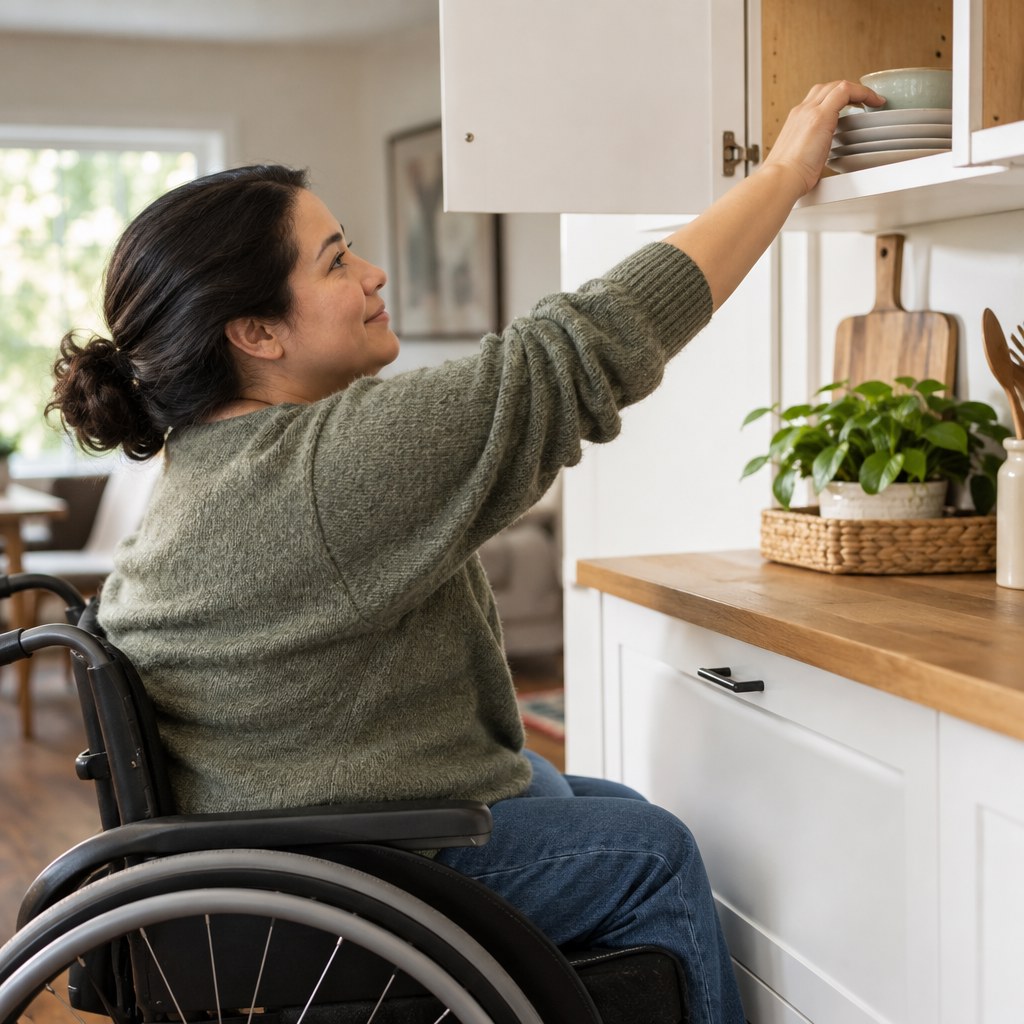
    Woman using a wheelchair reaching up to dishes in a high kitchen cupboard.
    High cupboards can put everyday items out of reach. Ask which items should be moved to an accessible height.

    Why ordinary spaces create barriers

    Barriers rarely have one cause. A person’s mobility, vision, hearing, memory, concentration, pain, stamina, or ability to process busy surroundings may vary from day to day. Environments also change: furniture moves, lighting fades, deliveries block entrances, and routines become hurried. In businesses and shared settings, a barrier may affect visitors, staff, volunteers, or family carers as well as the person you first had in mind. Looking at the interaction between a person, a task, and a place prevents assumptions and leads to more useful solutions.

    Accessibility is therefore a conversation, not a checklist imposed on somebody else. Ask permission before changing personal areas. Invite the loved one to describe what feels tiring, unsafe, embarrassing, confusing, or unnecessarily slow. Observe only with consent, and treat their experience as the starting point. A family member may notice a loose rug; the person using the room can explain whether the real problem is glare, balance, pain, or not having a nearby place to sit.

    Choose changes by impact, not appearance

    Begin with the routes and tasks used most often. An entrance, bedroom, bathroom, kitchen, work station, reception desk, or vehicle transfer may deserve attention before a larger redesign. Focus first on changes that remove a clear obstacle or reduce the chance of harm. Examples include clearing cables from walkways, improving even lighting, adding high contrast labels, choosing stable seating with arms, fitting easy-grip handles, or placing frequently used items between shoulder and knee height. These are examples, not universal prescriptions; needs differ.

    Low disruption options

    Low cost changes are often worth testing before permanent work. Rearrange rather than replace furniture, reduce visual clutter, use nonslip backing where appropriate, and create a consistent landing place for keys, medication, mail, mobility aids, or visitor information. In a public-facing setting, keep an unobstructed route to the counter and provide a quieter place to wait when feasible. Test one adjustment at a time, so you can tell what has improved.

    💡 Tip: Treat a trial change as information, not failure. If it is awkward or unused, ask why, adjust it, or remove it.

    Complete a respectful access review

    Set aside time when neither of you is rushed. Walk through a usual day together, from arriving and unlocking the door to preparing food, working, washing, resting, and leaving. For someone with fluctuating energy, review the difficult times of day as well as their best times.

    1. Map the route. Note every doorway, turn, threshold, surface change, seat, switch, sign, and storage point. Record where help is needed and what happens when the task cannot be completed.
    2. Identify the priority. Ask which barrier limits dignity, participation, safety, work, or rest most. Choose one or two issues rather than attempting everything at once.
    3. Match the response. Consider simple layout changes, equipment, communication adjustments, or professional advice. A qualified occupational therapist, accessibility specialist, contractor, or workplace lead may be helpful when a change involves safety, building work, or formal responsibilities.
    4. Try and review. Agree what success looks like, such as less reaching or fewer reminders. Check in after use, especially if symptoms, routines, or staffing change.
    Woman using a wheelchair reaching for a mug on an open shelf.
    Check shelf heights and reach with the person who uses the space.

    Build accessibility into everyday practice

    For decision makers, accessibility works best when it is part of ordinary maintenance and service, not a last-minute exception. Give staff permission to report trip hazards, blocked routes, unclear signs, broken lighting, or inaccessible digital and printed information. Include access questions when purchasing furniture, scheduling events, planning refurbishments, or changing visitor procedures. Offer clear ways for people to request support without having to disclose more personal information than necessary. A respectful response can be as important as a physical alteration: allow time, speak directly to the person, and avoid moving mobility equipment or personal belongings without asking.

    Risks to avoid and how to recover

    Do not make changes over someone’s objections simply because they seem sensible. Removing familiar objects, rearranging a kitchen, or adding equipment without agreement can increase distress and reduce trust. Avoid treating one solution as permanent when needs fluctuate. Also avoid relying on temporary fixes that create new hazards, such as trailing extension leads, unstable stools, loose mats, or furniture that narrows an escape route. If a change has not worked, return to the person’s experience: What is harder now? What feels better? Pause the change if necessary, document the concern in a workplace, and seek appropriate professional guidance for complex mobility, personal care, or building issues.

    A simple decision framework

    Start with the person and the task. Then consider the place, the likely benefit, the effort required, and any new risk. Choose the least disruptive useful change, test it with consent, and review it together. If the barrier remains or safety is uncertain, involve a suitably qualified professional. Accessibility is ongoing care for a shared environment, not a one-time project.

    Take the next manageable step

    Choose one room, route, or routine to review this week. Write down what the person says matters, make one agreed change, and notice its effect. You do not need to solve everything alone. Explore Stronger Together’s support and resources for compassionate connection and practical information; public support is free, and donations are optional. A small, respectful improvement today can make tomorrow’s routines feel more possible, familiar, and shared. Start gently today.

    Explore support

  • When Grief Comes in Waves: Finding Support on Difficult Days

    When Grief Comes in Waves: Finding Support on Difficult Days

    Why grief can feel unpredictable

    Grief rarely follows a steady path. A conversation, anniversary, empty chair, medical appointment, financial task, or ordinary song can bring loss sharply back into the present. These surges may arrive after a death, during a loved one’s illness, after trauma, or when disability and changing roles reshape family life. They do not mean you are failing, moving backward, or grieving incorrectly.

    The difficult day is often not the whole story, but it can demand immediate care. The goal is not to force grief away. It is to recognize the wave, reduce pressure, and choose support that fits the moment. With a simple plan, individuals, families, caregivers, and workplace leaders can respond with steadiness while leaving room for real feeling.

    What brings the waves closer

    Grief has emotional, physical, social, and practical triggers. Fatigue, poor sleep, caregiving strain, conflict, administrative demands, and isolation can lower the capacity to cope. Dates and places matter, but so do quieter changes: a child reaching a milestone, a former routine ending, or a new diagnosis. For people living with chronic or invisible illness, grief may include repeated losses of energy, independence, certainty, or belonging.

    A wave can also follow progress. Returning to work, attending a family gathering, or clearing a drawer may highlight what has changed. There is no universal timetable. However, noticing patterns can replace self criticism with useful information: this is a hard hour, this task needs company, or this date deserves fewer commitments.

    Woman offering an arm around another woman seated under a blanket.
    A quiet pause can make space for the next manageable step.

    Choose support that fits the day

    Different waves call for different forms of support. A person may need someone to listen today and practical help tomorrow. Support does not have to be a long conversation or a major decision. The most useful option is often the one that is available, safe, and specific.

    Start with one safe person

    Send a direct message: “Today is difficult. Could you sit with me, call for ten minutes, or help with one errand?” Naming the request makes it easier for others to respond. If speaking feels too hard, use a prepared text, voice note, or agreed signal. A caregiver can also ask someone to stay with the person they support while they rest, walk, or attend an appointment.

    Use peer and community support

    Peer support can reduce isolation because people do not have to explain every feeling from the beginning. A support space may offer shared understanding, practical ideas, and permission to speak honestly. It is general support, not a replacement for clinical care. Explore Stronger Together’s support options when connection would help, and use the resources page to look for information at your own pace.

    Professional and urgent help

    Consider a licensed mental health professional or a healthcare professional when grief is persistently disrupting safety, sleep, work, caregiving, or daily functioning, or when it feels impossible to carry alone. In an immediate emergency, contact local emergency services or a crisis service in your area. If you are unsure, tell a trusted person plainly: “I am not coping safely and need help now.”

    Make support easier to accept

    People often want to help but do not know what to offer. Keep a very short list of requests: a ride, prepared meal, childcare, help with paperwork, a meeting companion, or a brief check in. Clear, specific options make it easier to accept care without managing another long conversation.

    Write this list down and share it with someone you trust.

    A difficult day plan you can use

    Plans work best when they are brief enough to follow while upset. Write yours on paper or save it in a phone note. Review it on a calmer day with a family member, friend, colleague, or care partner, then revise it as your needs change.

    1. Name the wave. Say what is happening without judging it: “I miss them,” “I am overwhelmed,” or “This appointment is bringing everything back.”
    2. Lower the next demand. Postpone nonessential decisions, simplify meals, cancel one optional task, or ask for practical help.
    3. Ground in the present. Drink water, sit somewhere steady, notice five things you can see, or take a slow walk if that feels safe.
    4. Make one connection. Contact the person on your list, join a support conversation, or ask someone to check in later.
    5. Choose a closing ritual. Light a candle, play a meaningful song, write a few lines, or place tomorrow’s first task where you will see it.

    For business owners and managers, a plan can include a private check in, flexible deadlines where possible, and clear coverage for essential tasks. Do not require disclosure. Offer choices, protect confidentiality, and agree on the next workable step rather than expecting someone to “bounce back.”

    Woman wrapped in a blanket with another person's hand resting on her shoulder.
    Small, dependable actions can help carry a demanding day.

    Common mistakes, and a kinder recovery

    One common mistake is treating a surge as proof that nothing has improved. Another is waiting until distress is unbearable before telling anyone. Some people overcommit to stay busy; others withdraw completely. Neither response makes a person weak. If a plan did not work, review it gently: Was the request too vague? Was the supporter unavailable? Did the day need professional or practical help instead?

    Avoid comparing grief with someone else’s timeline or demanding gratitude before pain has been acknowledged. Avoid using alcohol, substances, or risky behavior to numb intense feelings; reach out instead. Recovery can be modest: drink water, send the message you delayed, reschedule one task, and return to your plan tomorrow.

    💡 A useful boundary: supporters can listen and help with practical steps, but they cannot solve grief on demand. Let care be consistent rather than perfect.

    A short decision framework

    On a difficult day, make three decisions. First, ask: is this a wave I can meet with rest, routine, and connection, or do I need professional or urgent help? Second, choose one person or support space to contact. Third, reduce the day to one essential responsibility and one caring action. This framework respects both reality and capacity. Grief may remain present, yet you can still make a safe next choice.

    You do not have to carry this alone

    Support can begin with one honest message, one quiet pause, or one shared conversation. Visit Stronger Together to explore free public support and practical resources; donations are optional.

    Find support

    Further reading

    General information. Service arrangements and emergency numbers in international resources may differ from South Africa.

  • Creating a Simple Caregiving Plan When One Person Cannot Do Everything

    Creating a Simple Caregiving Plan When One Person Cannot Do Everything

    When Caregiving Has Become Too Much for One Person

    Caregiving often begins with one committed person stepping in: a partner, adult child, friend, or colleague. Over time, appointments, meals, personal care, paperwork, transport, supervision, and emotional support can turn a generous commitment into an unsustainable role. The problem is not a lack of love or competence. It is that one person cannot reliably cover every need, every day, while also protecting work, health, finances, and relationships.

    A simple plan does not make illness, disability, dementia, grief, or recovery easy. It makes responsibility visible and shareable. This article shows how to map needs, choose realistic helpers, create a usable weekly schedule, and prepare for changes. The goal is not perfection. It is a safer, steadier arrangement where nobody has to carry everything alone.

    Why Informal Caregiving Plans Fail

    Most families do not set out to create confusion. They respond to the next urgent task. When roles remain unspoken, the most available person becomes the default for every decision. That can lead to missed handoffs, resentment, exhaustion, and preventable crises.

    Workplaces and community groups can face a similar pattern when a staff member, client, or member needs practical support. Good intentions help, but informal arrangements can depend on memory and goodwill. A written plan gives everyone a shared reference point, including the person receiving care whenever they can participate.

    Women discussing a written plan around a table.
    A written plan turns concern into coordinated, manageable support.

    Build the Plan Around Real Needs

    Start with a calm conversation rather than a crisis meeting. Ask the person receiving care what matters most to them and what help feels acceptable. Then list tasks without assuming that family members will automatically take them on.

    Separate essential needs from preferences. Essential needs might include safe meals, mobility support, personal care, medication routines managed by the appropriate professional, appointments, and urgent contacts. Preferences may include a particular shopping day, visitor, or activity. Both matter, but this distinction helps the group decide what must be covered first.

    Create Clear Categories

    Use plain categories: daily living, health coordination, home and finances, connection, and emergencies. For each category, write the task, frequency, preferred helper, backup helper, and any instructions. Keep sensitive details only where they are genuinely needed and store the document securely.

    Choose Help That Matches Capacity and Consent

    Sharing care does not mean assigning people vague promises such as help more. Instead, match each task to a person’s actual capacity. Consider time, skills, location, comfort level, and the care recipient’s consent. Someone who lives nearby may handle groceries. Another person may be better placed to coordinate calls, paperwork, or a weekly check-in.

    No helper should be expected to provide clinical care, make medical decisions, or manage medicines beyond their role and training. When needs exceed informal support, ask an appropriate healthcare, social care, legal, financial, or workplace professional what options apply locally.

    💡 Tip: Name a coordinator, not a controller. The coordinator keeps the plan current and flags gaps; they do not have to complete every task.
    Two women reviewing an open notebook together at a table.
    Small, specific roles make it easier for people to contribute.

    Turn the List Into a Weekly Working Plan

    Keep the first version short. One page is often enough. A shared paper sheet, calendar, or secure digital document can work if everyone can access it. Choose one format rather than scattering information across texts, notebooks, and memory.

    Review the plan at a predictable time each week. Confirm what changed, who is unavailable, which appointments are coming up, and whether the person receiving care wants anything handled differently. Record decisions briefly so nobody has to reconstruct them later.

    Use a Simple Task Record

    A useful record answers five questions: What needs doing? Who owns it? When is it due? Who covers absence? Where are the relevant details?

    Task Owner Timing Backup Notes
    Breakfast support Jordan Daily Sam Preferred foods listed
    Transport to appointment Lee Tuesday Jordan Confirm pickup day before
    Bills and forms Morgan Friday Lee Store documents securely

    Step by Step: Start This Week

    1. Bring together the person receiving care and the people who may help. If a full meeting is stressful, collect views separately.
    2. Write every recurring task, including unseen work such as ordering supplies, checking messages, and arranging transport.
    3. Mark tasks as essential, helpful, or optional. Identify anything that requires professional input or formal authority.
    4. Ask each helper to choose specific tasks and state clear limits. A reliable no is more useful than an uncertain yes.
    5. Add backups for essential tasks, emergency contacts, and a simple way to report changes.
    6. Set a review date within two weeks. Adjust before a small gap becomes a serious problem.

    Risks and Mistakes That Undermine a Good Plan

    Do not confuse a plan with a promise that every problem will disappear. Health, energy, employment, money, and family circumstances change. The plan must be flexible enough to change without blame.

    Common warning signs include repeated missed tasks, one helper silently covering gaps, arguments about expectations, or the caregiver cancelling their own essential appointments. Treat these as information, not failure. Pause, simplify the workload, and seek additional advice or services where appropriate.

    ⚠️ Warning: Avoid making one person the permanent emergency backup. If they are unavailable, the plan needs another response, such as a relative, neighbour, paid provider, workplace adjustment, or professional service.

    A Simple Decision Framework for the Next Step

    When deciding what to do next, use three questions. Is this task essential to safety, dignity, health, or daily stability? Is there a named person who has agreed and is able to do it? Is there a backup if circumstances change? If any answer is no, the task is a priority for discussion.

    Start small: choose the few responsibilities that create the most pressure, then build outward. A plan succeeds when people can understand it, use it, and revise it with honesty.

    You Do Not Have to Carry Care Alone

    A clearer plan can protect the person receiving care and the people around them. If you need a place to begin, explore practical information and compassionate peer support. Stronger Together – United We Stand offers free public support, and optional donations help sustain that work. Take one next step today: share the task list, ask for a specific commitment, or review available resources with someone you trust. Even a brief conversation can replace uncertainty with a more workable shared direction for everyone involved.

    Explore Support

    Further reading

    General information. Service arrangements and emergency numbers in international resources may differ from South Africa.

  • Caregiver Guilt: Making Room for Rest Without Losing Your Sense of Care

    Caregiver Guilt: Making Room for Rest Without Losing Your Sense of Care

    Needing rest does not cancel your care

    Caregiver guilt can appear when you sit down, leave the house, lose patience or wish someone else would take over. You may know that you are exhausted and still feel that a break is something you should earn. When another person depends on you, even a small pause can seem to carry consequences.

    Guilt is a feeling worth listening to, but it is not a reliable measure of how well you are caring. Sometimes it points to a task that needs attention. Sometimes it reflects a promise no person could keep: always being patient, available and able to prevent every difficult outcome.

    The aim is to identify what needs doing, arrange suitable support and allow your needs to be part of the plan. You can love someone and need time away from responsibility.

    Separate a practical concern from self-blame

    Ask yourself what, specifically, you fear will happen if you rest. “Their lunch will be missed” is a problem you can plan around. “A good daughter would never want a break” is a harsh rule about yourself. Treating those thoughts as the same problem can leave you trying to solve an impossible standard by working harder.

    Write two short notes: the actual care need and the help required to cover it. If something was missed or you spoke sharply, make the repair you can. Apologise where appropriate, address the task and consider what would reduce the pressure next time. Replaying the moment endlessly does not create more support.

    Woman seated with a mug and blanket while an older person rests nearby.
    Rest can preserve the attention that loving care requires daily.

    Choose a break that would actually help

    Rest can mean sleep, a quiet meal, seeing a friend, attending your own appointment or spending time without making decisions for anyone else. It does not have to look productive. An hour full of chores may be time away from direct care without being much of a break.

    Start with a period you can describe clearly: “Wednesday from two until three” is easier to arrange than “sometime when things settle down.” If a longer break is not available, a shorter pause may still matter. It is also reasonable to say that short pauses are no longer enough and ask about more substantial support.

    A checklist before stepping away

    • Essential needs: Identify what must happen during the break, including meals, agreed medicine routines and any supervision the person requires.
    • Suitable cover: Confirm that a willing person has accepted the role and can safely carry it out. Clinical tasks require appropriate skills and guidance.
    • A clear handover: Share necessary instructions, contact details and the person’s preferences without sharing more private information than needed.
    • A backup: Agree what happens if the helper cannot attend or the person’s needs change.
    • Your availability: Decide when you will return and which circumstances require contact before then.

    Keep this proportionate to the situation. Some people need substantial supervision; others can safely spend time alone and may value their privacy. Involve the person receiving care in arrangements wherever possible rather than assuming what they need.

    Ask for a commitment, not a vague promise

    People may say “let me know if you need anything” without understanding the work involved. Give them one task they can accept or decline. For example: “Could you stay with Dad between two and four on Saturday? I will leave the agreed instructions and emergency contact numbers.”

    Someone who cannot provide direct care might organise transport, collect supplies or prepare food. Ask about their limits too. A dependable small commitment is more useful than an ambitious offer that leaves you covering the gap at the last minute.

    Our guide to creating a simple caregiving plan includes a way to record tasks and backups. The National Institute on Aging also offers guidance on sharing caregiving responsibilities.

    Woman holding a mug while an older person rests on a sofa behind her.
    Planning a break makes space for care and your wellbeing.

    Use a kinder response when guilt returns

    You may still feel guilty after arranging everything carefully. That feeling does not automatically mean the arrangement is wrong. Try answering it with the facts: “Lunch is covered, the helper knows the plan, and I will be back at four.” You do not need to win an argument with every anxious thought before taking the break.

    1. Name the thought: “I am telling myself that resting means I do not care.”
    2. Check the situation: Is an essential need uncovered, or am I uncomfortable letting someone else help?
    3. Take the appropriate action: Resolve a real gap; otherwise, return to the agreed plan.
    4. Review afterwards: Ask what worked and what needs changing before the next break.

    If the arrangement fails, revise it without treating that setback as proof that you must do everything forever. A missed handover may call for clearer instructions, a different helper or professional input.

    When family help is not enough

    If care needs exceed what you can safely provide, discuss options with the relevant healthcare or social care team. Ask what respite, home support or other services may be available locally, including eligibility and costs. If you feel threatened or anyone is in immediate danger, prioritise safety and contact local emergency help.

    Persistent distress also deserves attention. A qualified professional can help you explore guilt and coping; practical help is still needed when the workload itself is too much. For companionship, our article on loneliness while caring offers manageable ways to reconnect.

    Choose one responsibility to discuss with someone this week. Rest belongs in a workable care plan because you are a person with needs too.